Blog

  • Hyperlight Kites

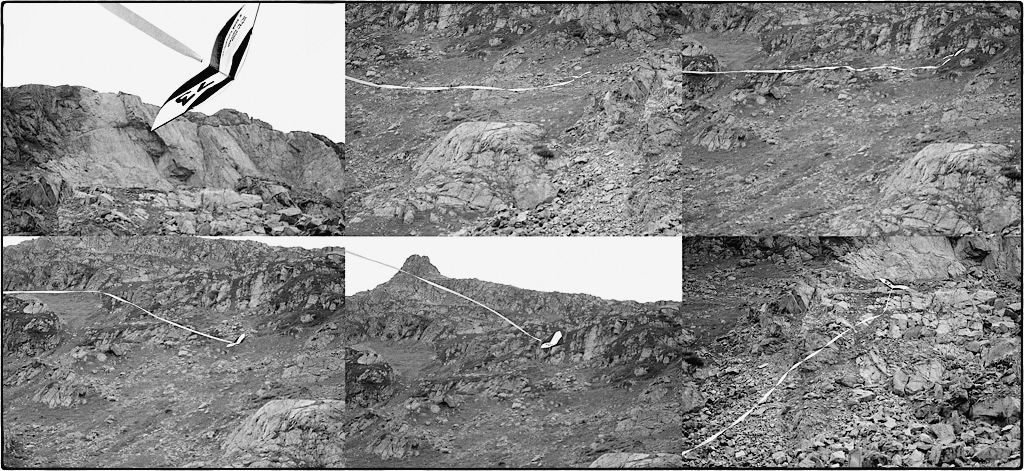
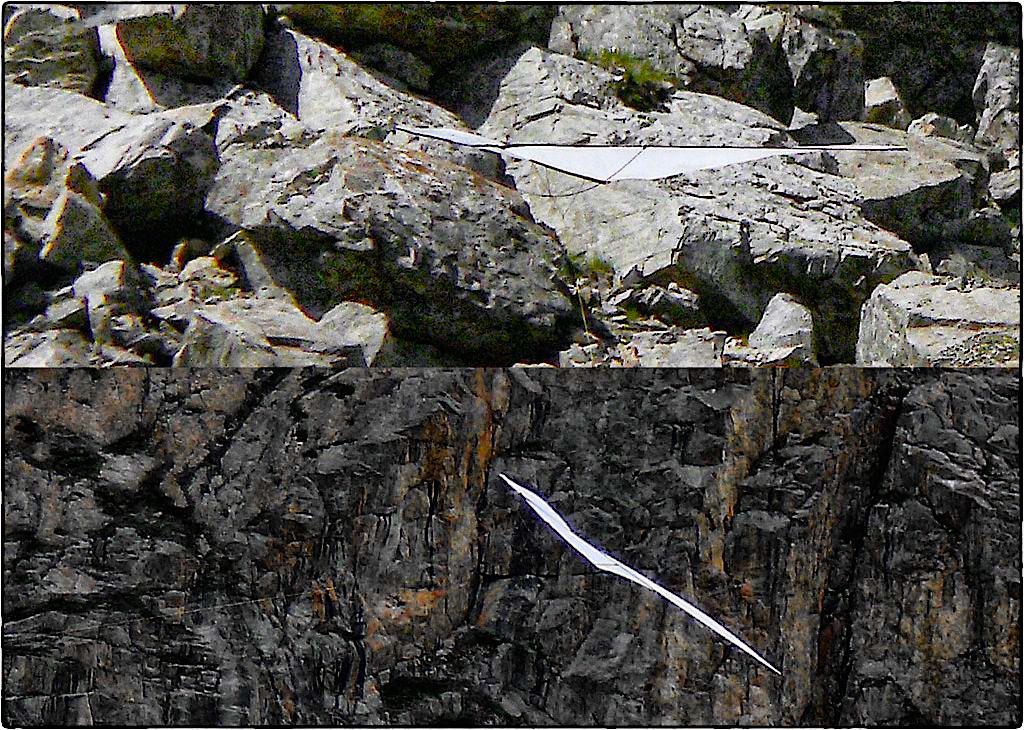
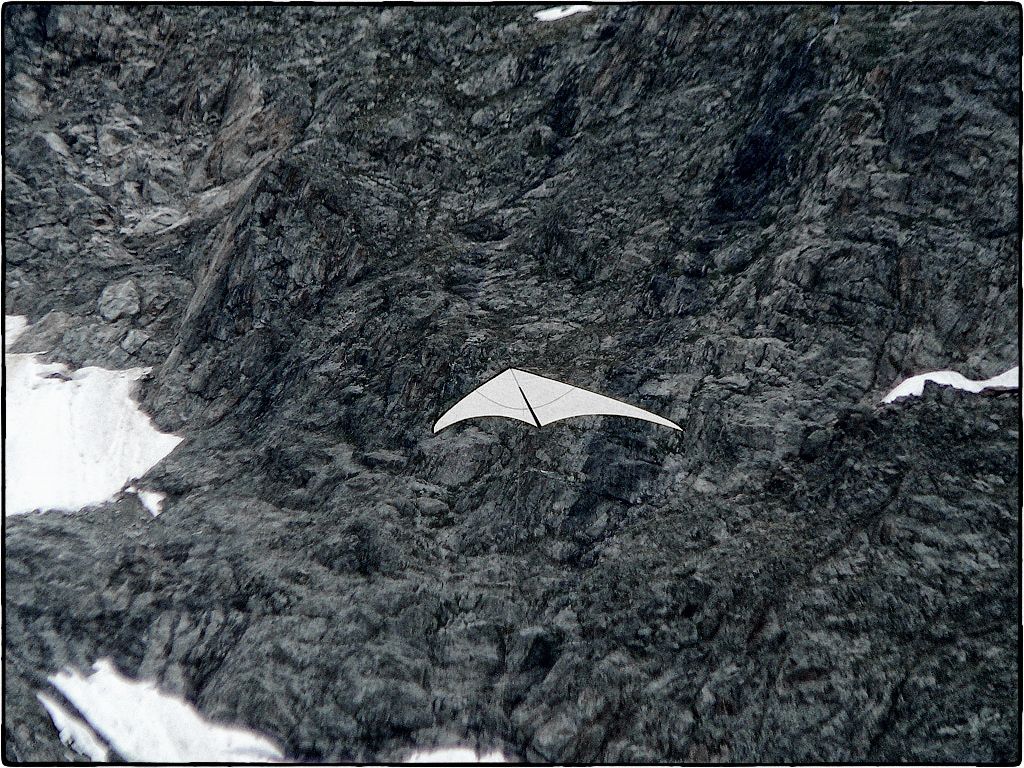
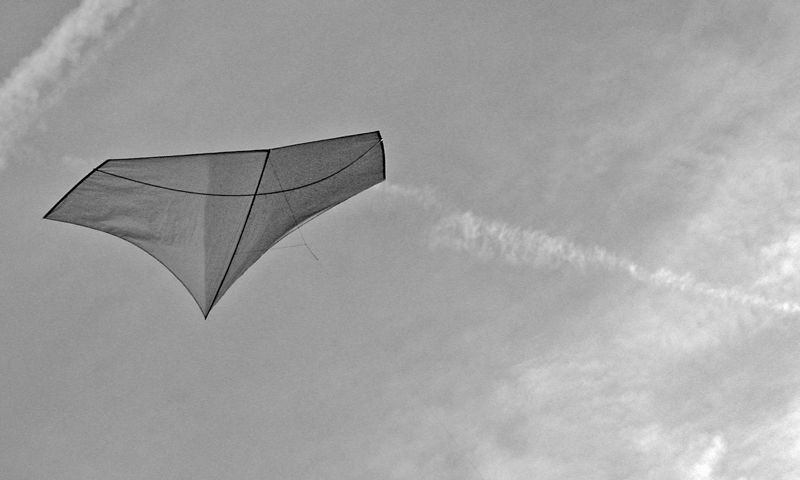
    Hyperlight kite in Dyneema white.

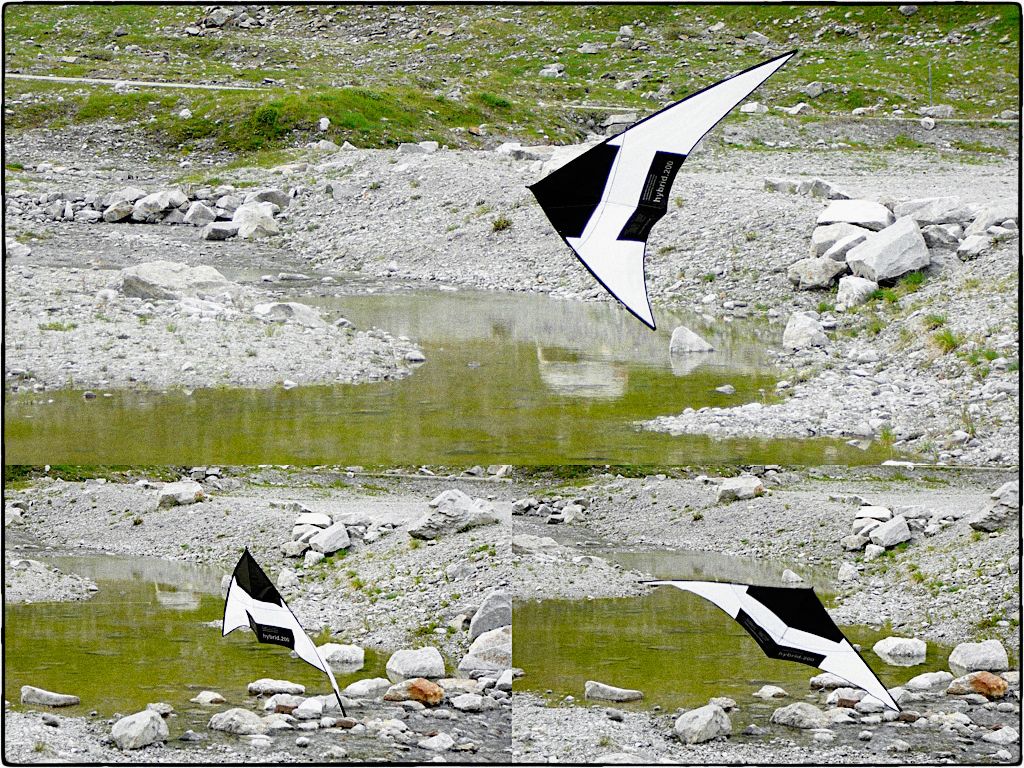
    hyperlight kite in dyneema pale olive.

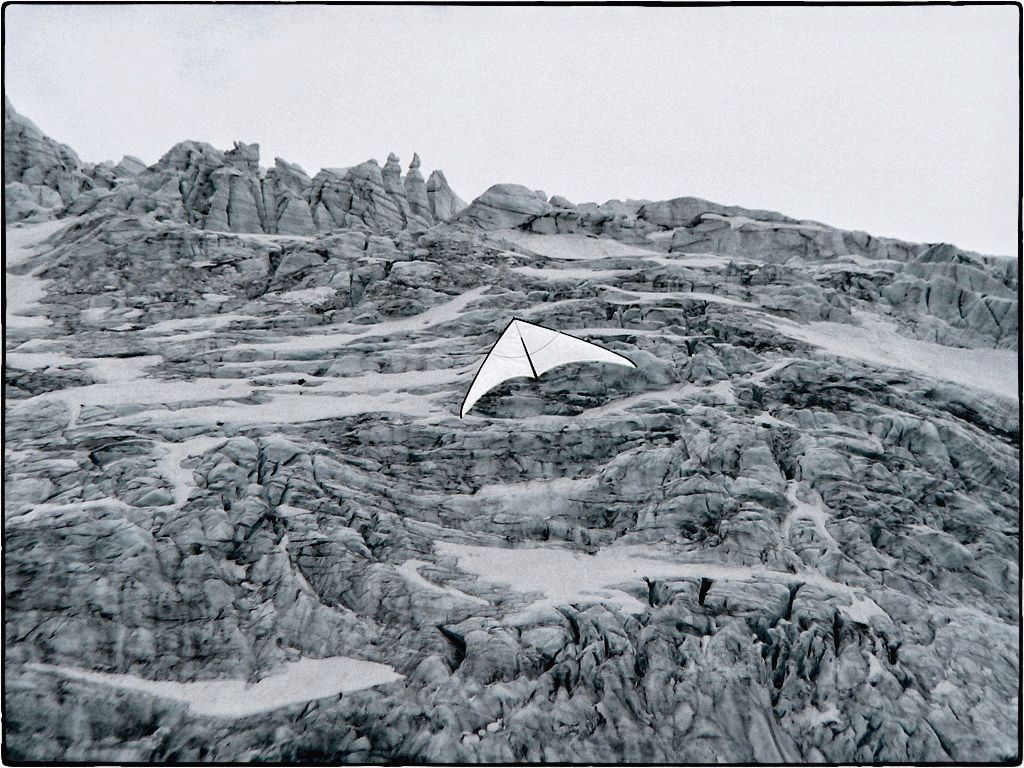
    hyperlight kite in dyneema blue.

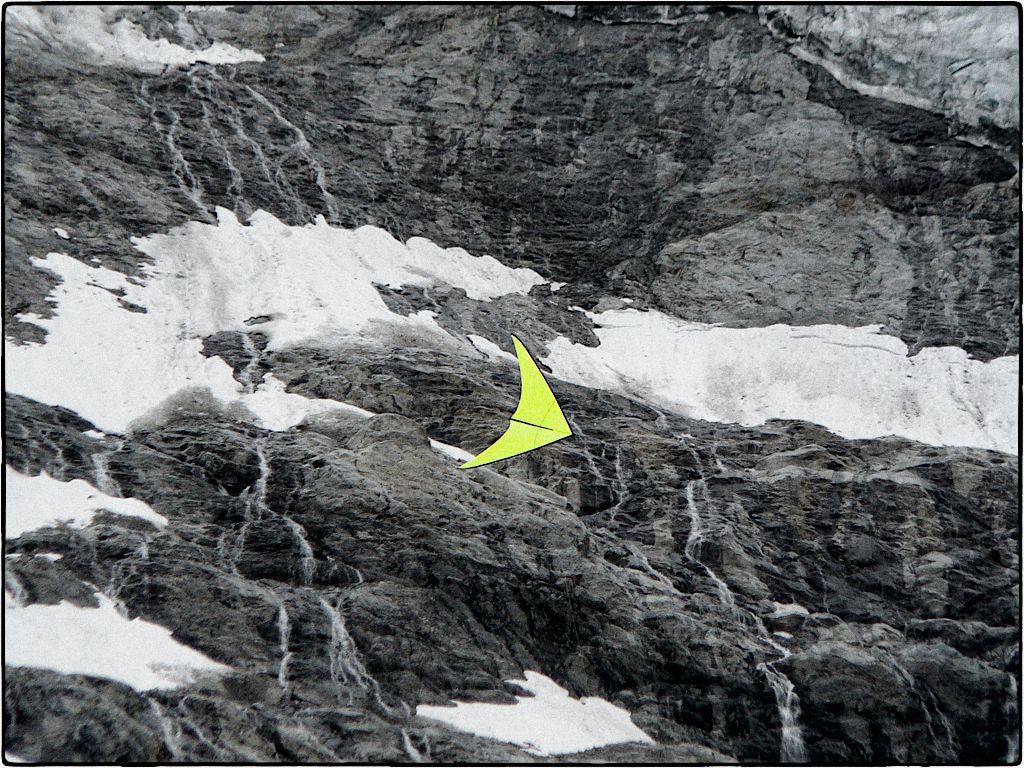
    hyperlight kite in dyneema silver.

    The hyperlight kites

    There are 5 very light zero-wind kites which we are able to manufacture using translucent Dyneema Composite Fabric. These kites are:

    • even lighter than with an Icarex sail
    • floating slower in zero wind
    • a tad more efficient in mellow wind

    De tomaso superleggera hyperlight

    Weight: 30 g. The framing is the same as in the Icarex Edition. This kite is gentle in all its behavior, straightforward and the archetype of a floating minimum. The Tube is 860 mm long.

    dt superleggera any edition…

    De tomaso, honey hyperlight

    Weight: 31 g. The thin-walled carbon tubes of the wings are identical to those of the Icarex edition, light but sturdy. The Tube is 820 mm long.

    dt honey any edition…

    Like a rolling stone ul hyperlight

    Weight: 53 g. The wing structure is the same as in the Icarex Edition, featuring the smooth transition towards the wingtips, which are wafer-thin carbon. The Tube is 915 mm long.

    lrs ul any edition…

    The long way home handling compact stradale hyperlight

    New:

    The only Hyperlight in the even lighter dyneema composite fabric, and therefore only in translucent white colorless.
    Weight: 25 g. The frame is identical to the Icarex Edition, which is already ultralight. The wingtips are made of wafer-thin carbon. The kite pushed to the limits comes in a 840 mm tube.

    lwh hcs any edition…

    The long way home hyperlight

    Weight: 83 g. The wing structure is the same as in the Icarex Edition, with the smooth telescopic transition towards the wingtips. There are three Skyshark 2pt in this kite, the Tube is 1’120 mm long.

    the long way home any edition…


    Dyneema Composite Fabric
    formerly called Cuben Fiber
    aka Spectra Laminate Edition

    Dyneema colors

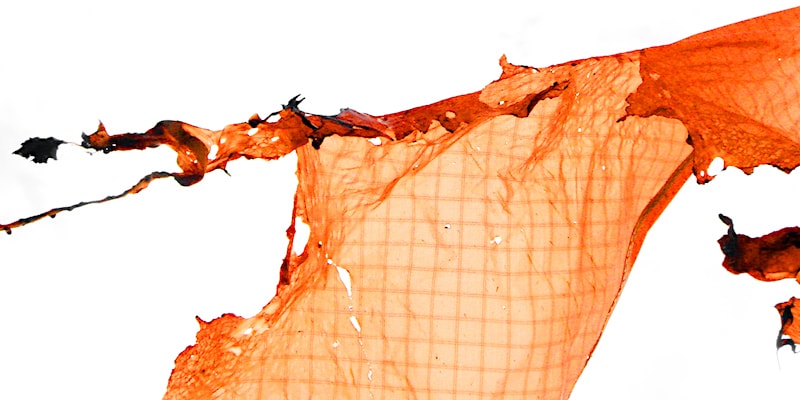
    Dyneema Composite Fabric white is constructed with colorless fibers between the mylar films. It resembles the lighter material of the “I’ll be back urban flow edition”. But since the fibres are a bit stronger, they absorb more light and appear a bit whitish. That’s why we call it “white” instead of “clear”.

    The green Dyneema Composite Fabric has yellowish-green layers of mylar and every couple of feet stripes with a slightly higher saturation appear. The colour is complex, a touch of “beige” is also present. The laminate is similarly translucent to that of the other editions.

    Blue Dyneema Composite Fabric has the highest color saturation among these special kites. The clearly visible and quite irregular stripes make for a subtly individual kite. Rare and no longer available from the manufacturer.

    In the Dyneema Composite Fabric silver the Dyneema fibres are a tad darker and the mylar layers slightly grey, again with the typical irregular stripes. The material is similarly translucent as the blue or green editions, but shimmers a tad more under hard direct lighting. It looks like silver. Rare.

  • Manual: floating without wind

    1 Assembly of the kite


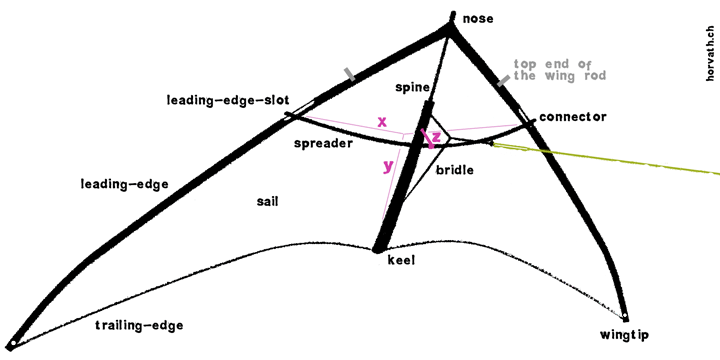
    The parts and structure of a zero wind kite, schematic.


    Insert one end of the spreader into one leading edge connector. Then the opposite end of the spreader, while bending it generously, exactly straight into the opposite connector. For high gliding flights mount the vinyl cap onto the nose.


    Smoothen the wingtips and take a look at the position of the lines at the upper leading edge slots. They should face the small dots on the sail. To be prepared for a good flight, check the Z-line and the kite for symmetry. Done.


    Wing design kites: First, assemble the wings. There’s an upper and a lower thinner part. The complete wing frame starts somewhere between the nose and the leading edge slot, and ends in the wingtip.


    I’ll be back tiny:
    untubing and tubing

    2 The first flight

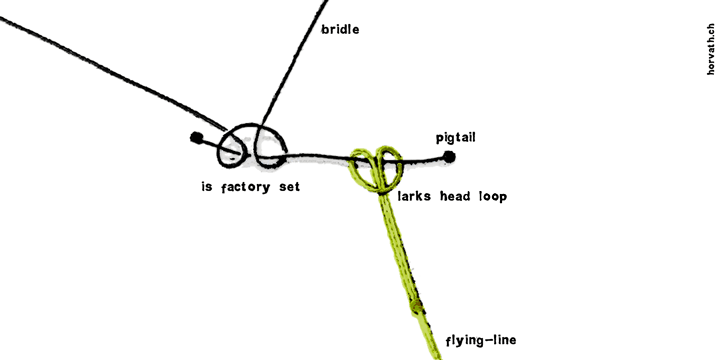
    Attaching the flying line to the kite with a larks head loop.

    Lay plenty of flying line well sorted to the ground and connect the upper end to the pigtail with a larks head loop.

    Start your first flight with a generous high launch, pulling the kite up using both hands, until it circles high above you around the zenith. Then try to do the most important move: a mellow gliding, slow landing.

    3 Floating with zerowind kites

    The Landing

    Landing with zero wind kite.

    The most important move is landing, let go, break. The kite is landing softly on the ground, its nose pointing at the pilot. That‘s the classic starting position again.

    Elegant: While the kite is gliding towards you, stall it with a sharp impulse half a foot above the ground and it will lie down in slow motion. That’s a clean basis for the high start.

    High start

    High start with a kite in no wind, on a long flying line.

    A generous launching method when there‘s plenty of space and very light wind to no wind. Use both hands, feel the pace for the optimal rising speed and keep it constant. This way a minimum length of line is enough to reach a good height.

    Begin your very first flight with a high start and pull the kite up to the zenith and beyond. In light wind, the kite will turn by itself and fly away from you.

    Hand starts

    Illustration of a hand-start with Horvath-Kites.

    Lay out a lot of flying line to the ground and hold it loosely in one hand. With the other hand take the kite at the keel and throw it straight away, slightly downwards. Or hold your kite at its nose and start your flight with a 360 flat-spin or a 180 followed by a fly-away.

    Up and over

    Up-and-over with Horvath-Kites and zero wind.

    Pull the kite beyond the zenith and let it continue with a flyaway glide. Prepare a lot of line well sorted ready on the ground. With a light headwind, the kite will float on the spot before it will turn back into the wind and glide away from you.

    Flat-spins

    The flatspin with zero-wind-kites.

    The flatspin is essential, especially when floating in confined urban space. Let your kite tilt sidewards by giving a good dose of line. Hit, with a sharp pull, the nose to the opposite side and it will fly a nice flat-spin. The sharper and shorter the impulse and then the more slack is given, the flatter the 360, 540 or 720 will be.

    The 180 flat-spin initiates a nice long flyaway followed by pulling up the kite. By repeating this a couple of times, the kite will be on a good height in zero wind. Lay out plenty of flying line on the ground in advance before you fly these moves.

    Fly-away and dive

    Flyaway and dive, with long prepared flying line.

    Gliding towards the sunset, try to give plenty of line, so that nothing may stop its long fly away. Maybe check how and where the flying line is lying around on the ground.

    The more aggressive style: Accelerate your kite with a heavy pull into a dive straight towards the ground. Kill this motion with a sharp impulse a few feet before the impact followed by a total slack. The kite will recover suddenly into a horizontal glide, and a few feet later will lift its nose. That‘s a good moment to pull the nose back towards you, then land or fly on.

    Groundwork, loops

    Looping with zero-wind-kites, near the ground.

    The kite can land on its flexible wingtips and hold the position when stalled, if the wind is gentle. Tilted positions can be corrected with short pulls: the kite will always look for a horizontal balanced position, use this behaviour.

    Let the nose fall gently forwards, slightly tilted and give a sharp impulse, followed by a total slack and the kite will perform a slow flat-spin one foot above the ground, with enhanced lift caused by the ground effect.

    Actually, only Urban ninja the bad qualifies for the exactly vertical looping. But with a tilted setup, e.g. 45°, all of our kites can do it. This is quite a harsh move. Most spectacular directly from the ground and back to the same place, but also possible up in the air.

    4 Folding scheme, tube

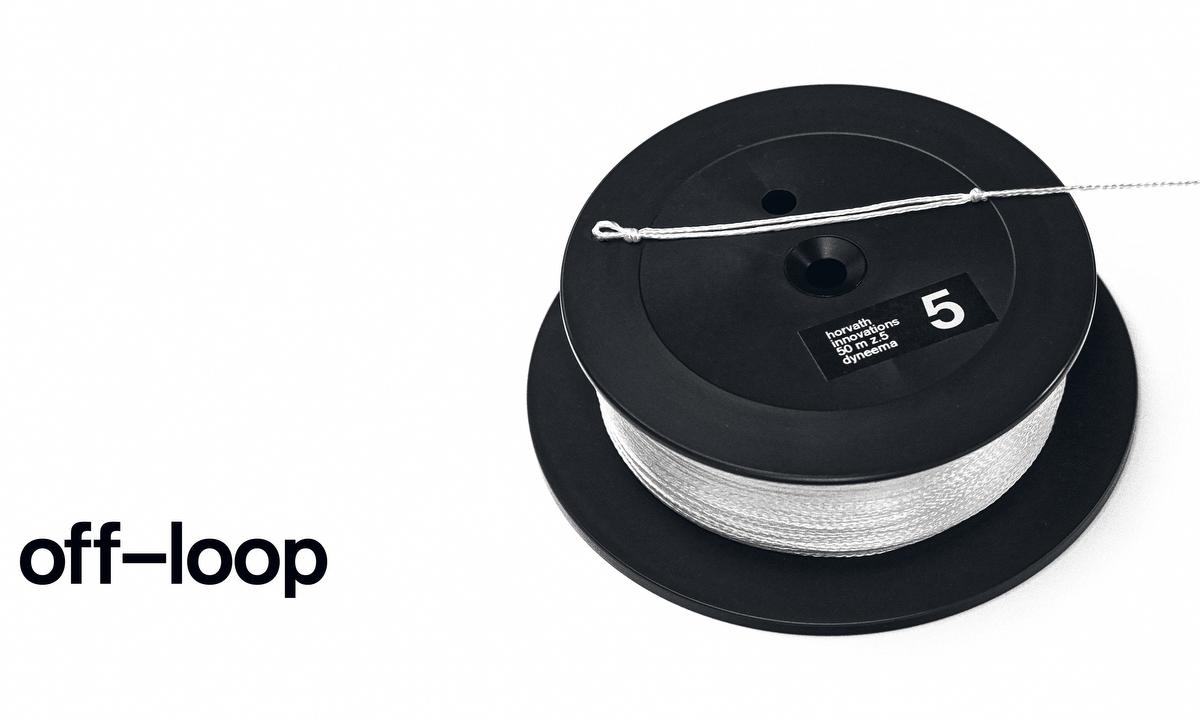
    Your flight is finished with a beautiful landing. Remove the flying line from the pigtail by just pulling the off-loop, which you made yourself after the first couple of flights.

    Off-loop on the kite reel.

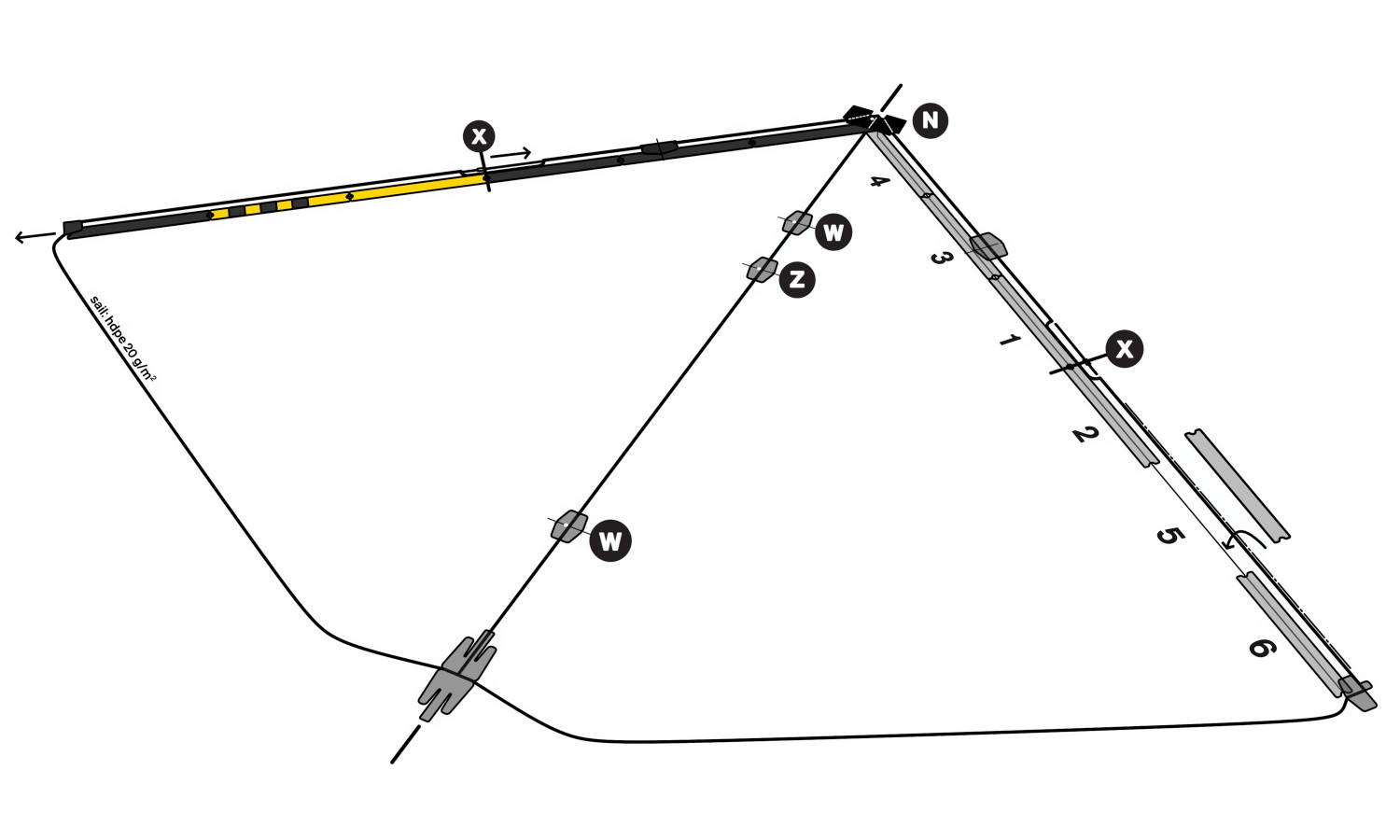
    Now hold the kite only by the spreader, snap off both connectors with your thumbs and let the wings fall. This way, the kite folds itself along the spine. There are two schemes to fold the wings:

    A : starting from the nose
    M : from the top end of the wing rods

    Schema M is used for kites with an extended trailing edge, like De tomaso superleggera, I’ll be back and some others. You see the folding in the sail when unboxing the kite.

    Sketch showing how to fold a kite: 2 schemas.

    Roll the kite around the spine and push it, from bottom, nose ahead into the tube. Pack the more sensitive trailing edge part into the cap and close the tube on this side. Then close the tube at the top.

    Never leave a wet or humid kite in a closed tube for a longer period. Icarex and Dyneema-Laminates are steam-tight, so it’s best practice to lay out wet kites loosely and let them dry at least for one night, before you store them in the tube.

    5 Setup, tuning

    Factory setting

    Your new kite is factory set up to how Horvath flies it. Optimized for zero wind, it tends to be agile, but not radical. Semi-static flights in light wind are also possible with this setup, with Stabilizer also in stronger wind.

    Most leave their zero-wind kites the same way for the rest of live. For personal, subtle optimizations, changing some settings is possible.

    Lateral tension of the sail optional

    This essential setup of the kite is tuned by the lines: vary the length of the X-Line with the Y-Line to adjust the tension of the sail precisely.

    To do this, open the double hitch at the keel and tension or loosen the Y-Line. The x-line, behind the sail on the picture, must always stay tight. Never let the whole load of the spreader tension the sail, that way the kite would not fly.

    The slacker the sail is (from wing to spine to wing), the slower and more agile the kite will float. With a tighter sail, but just a bit, glide-sequences will be more consistent.

    I’ll be back and C’est la vie, darling both don’t have a Y-Line: Move the stoppers of the leading edge connectors up or down to vary the effective length of the X-Line.

    Tension along the spine optional

    For slow gliding adjust a minimal, near zero tension of the sail along the spine. This is done with the short line at the nose. Factory setup: no tension at all.

    A more tightened sail gives a nice subtle bend to the spine: The kite will lift the nose better and will be more agile, requiring less space for the moves. The urban ninja ul is profiled by the sail itself, floating always lively.

    Dihedral optional

    Adjust the dihedral of the kite with the short z-line. In the neutral setup, there are two loops around the spreader. Three loops will pull the spine closer down to the spreader, resulting in a pronounced dihedral and more stable glides.

    Don’t open the knot, just loosen and tighten the loop. With one single loop the z-line is longer and relaxes the spine, resulting in less lateral drag in flat-spins. The kite becomes more agile overall.

    Bridle optional

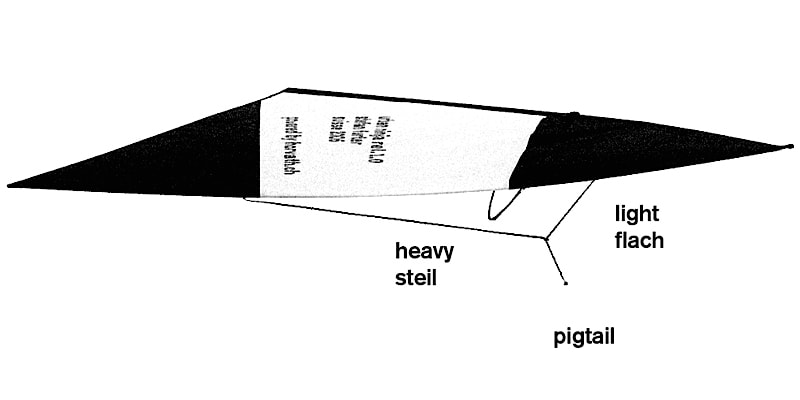
    • rather to front = light (flat attitude)
    • rather to back = heavy (steep attitude)

    The factory setting is between the two silver marks. With a lighter bridle the kite will react directly to the inputs, good for crisp flatspins. Due to reduced stability in climbing it’s anytime easy to prepare a flatspin out of a tilted position, even very close to the ground.

    A heavy bridle setup results in higher stability at climbing or in wind (high static flights, especially with Stabilizer), harder pull and less direct response in general. The factory setting supports a neutral, versatile flight characteristic, a bit on the agile side.

    Stabilizer optional

    When flying high in stronger winds you may want to insert the Stabilizer into some of the kites. In practice: a short line downtown, without Stabilizer, no wind. High flights with wind: a long line and the Stabilizer.

    6 Security

    • Switzerland: max. hight 60 m – 180 ft
    • Germany: max. line length 100 m – 300 ft

    Never fly:

    • in stormy weather
    • near powerlines and railroads
    • near airports or roads
    • beware of trees
    • respect people and animals

    Use, as much as possible, a short flying line, especially downtown. Laying the whole line out on the ground and putting the micro-winder into the pocket, you will be able to move around with the kite.

  • Workshop: Sticky 3.7

    Kite building kit, white hdpe-Film.
    The sail of the Sticky 3.7 is made of white hdpe-film. The cnc-plotted adhesive parts are black, interrupted by random yellow stripes. This makes the classic “the barcode sticky”.

    Facts

    Workshop at the atelier horvath.ch
    On a Sunday in autumn 2026.

    Open from 13:30 h, start 13:45 h, end 18:45 h.
    Sticky 3.7 workshop: 247 chf per person, excl. tax.
    Material, tools and everything else is included.

    Workshop

    The kite-building-workshops are good for everyone aged 11 and over. It doesn’t need any previous knowledge about kites, only some joy in handicrafts and anticipation of flying.

    • Take with you: nothing, everything is here. Maybe reading glasses?
    • Maybe a warm sweater, it’s rather cool here.
    • Tram 3, Tram 2, Bus 89, or bicycle.
    • Parking: use the “James” visitor parking lot opposite Flüelastrasse 23, the one with the big light blue P. Or Blue Zone, “blaue Zone”.
    • On the “James” site there is the bar “minimum” for those who want to stop by first. It’s usually open on Sundays. The “Café Hubertus” is always open on Sundays, about 7 minutes walk from us.

    There are 3 to 7 people in a workshop. We will make a Sticky 3.7 or Sticky wing high-tech zero wind kite and fly around with it. From time to time, there are brutally short theory monologues to counteract any arising boredom.

    The sail is made of ultralight white film. The adhesive stripes along the wing edges are black and yellow. You design the barcode pattern yourself. The framing is constructed with carbon rods.

    The 615 mm long shockproof tube is included. Perfect for the safe way home of the new gadget, made by you!

    Kite building sets

    A kit contains everything you need to make the kite and is available exclusively for people who have already built a sticky kite:

    • sail with markings on one side, hdpe white
    • plotted adhesive Icarex 9460, black and color
    • nose dacron™, perforated
    • transparent liner film, as a tool
    • carbon frame, ground and polished
    • nose part, rubber cap, wing connectors
    • 720 mm construction line with dyneema core
    • the finished fat pigtail
    • 17 m z.5 flying line on Microwinder™
    • brief building instructions, printed on paper
    • everything in the black 615-mm-Tube™, ø 50 mm

    Sticky 3.7 set: 110 chf excl. swiss tax
    Sticky wing set: 125 chf excl. swiss tax

    Further kite building workshops

    Workshops for private participants take place sporadically depending on current interest. Please ask, so that we can plan together.

    We offer also workshops for companies or clubs, in our rooms or at your company. Languages: Swiss german, german, english. Paperwork is in german. The kite is exactly the same: the barcode sticky 3.7.

  • Kites in the mountains

    Our kite-meetings in the alps

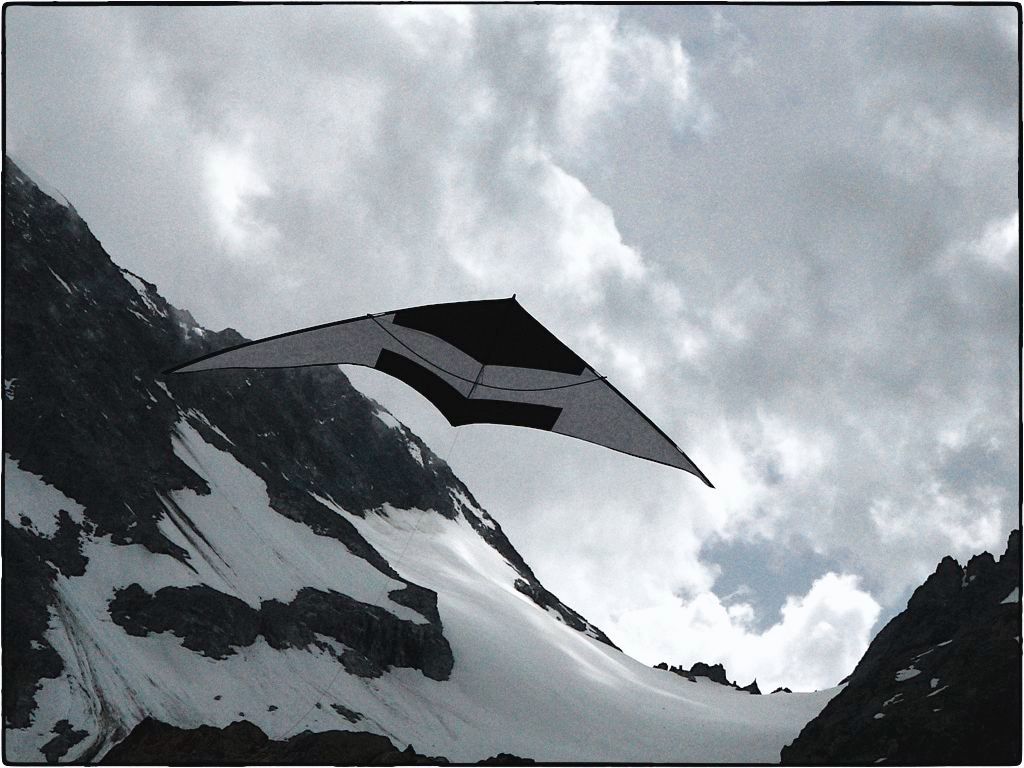
    Some time ago, we arranged several weekends with single line zero wind kite friends on Susten in the Swiss alps on 2300 m. These traditional meetings will be continued, they are impressive experiences.


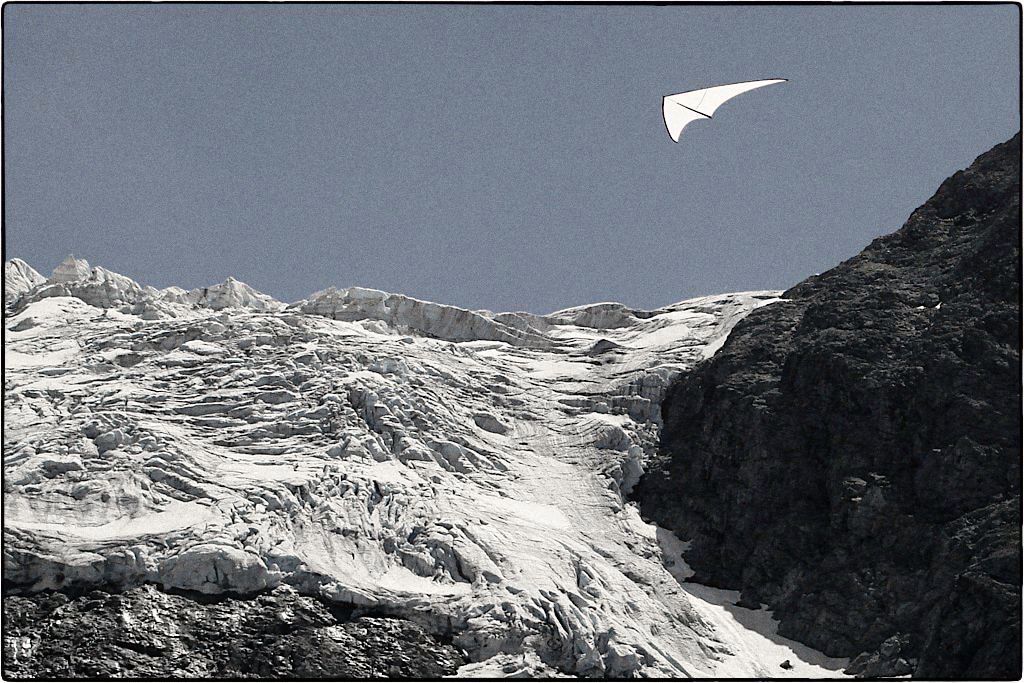
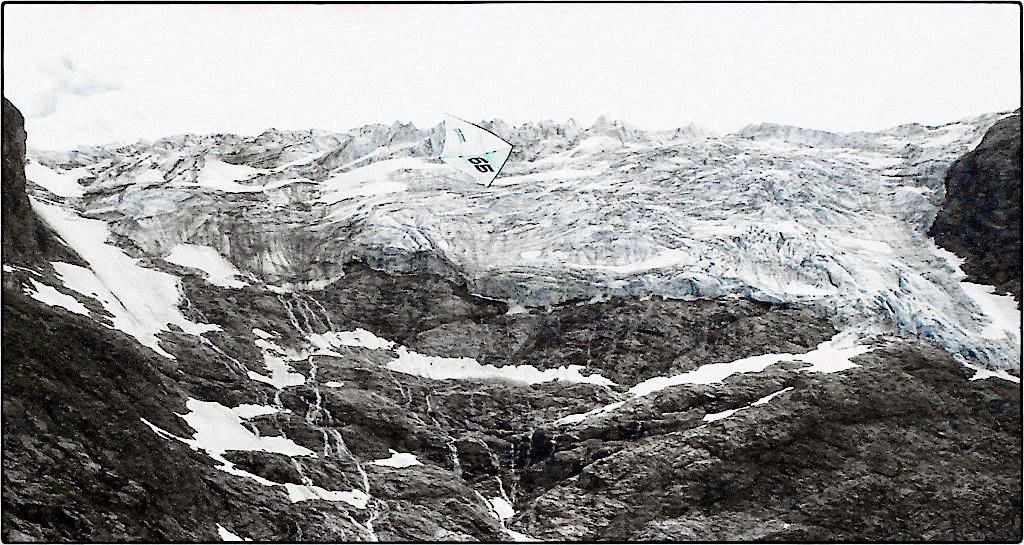
    A white kite over the Stein glacier.The kite of Franco Pinazza soaring over the Stein glacier: the long way home. © Gregor Peikert

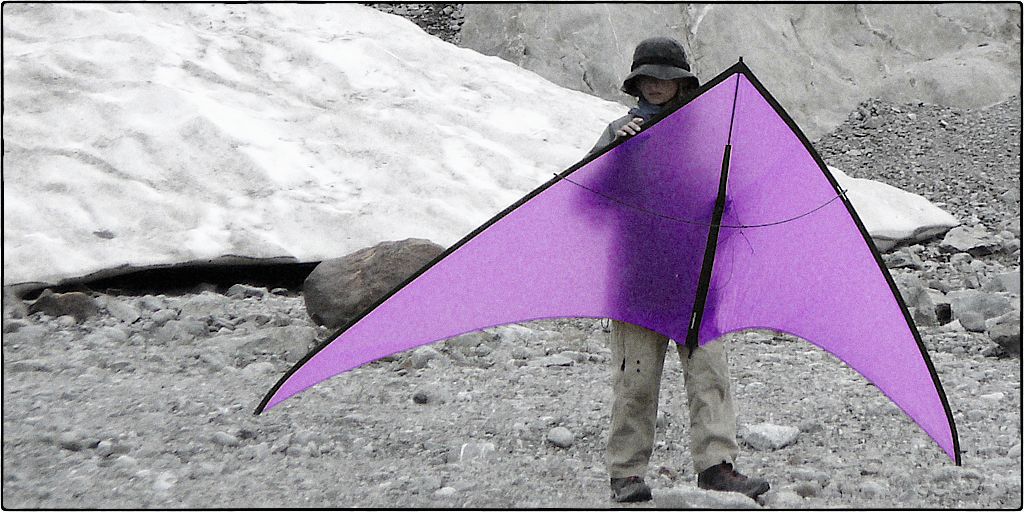
    Large kite in magenta with kid.Small person, large kite: 1.37 m vs. 2.74 m. @ Markus Egger

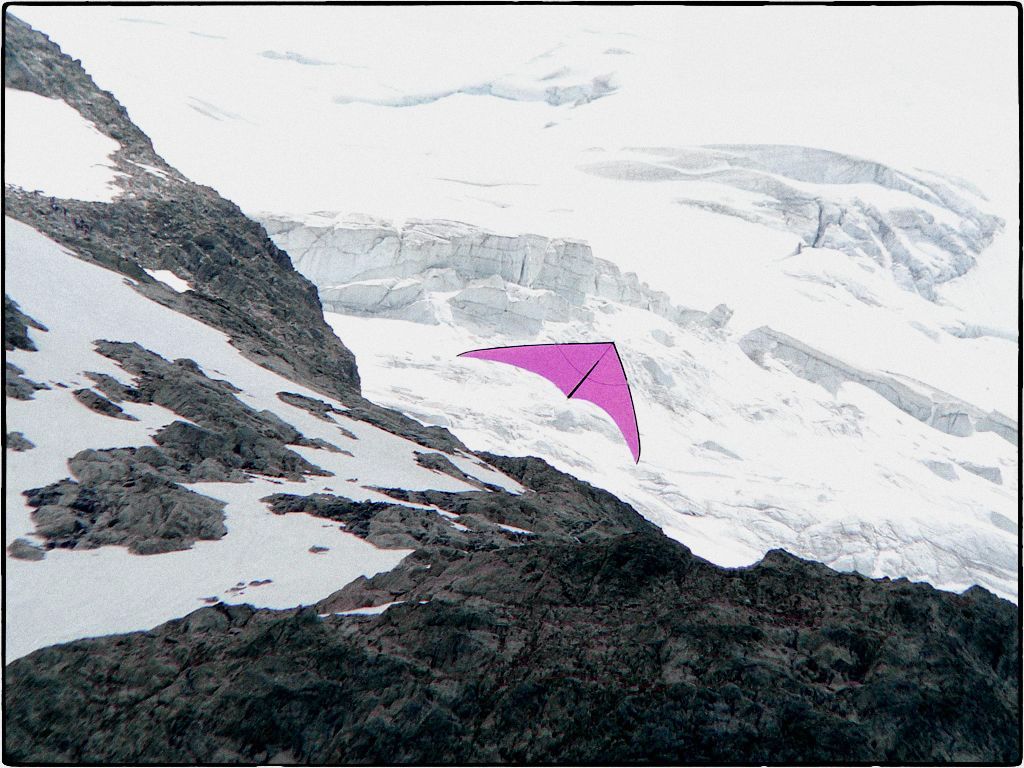
    A pink synergetic zero wind kite.Synergetic zero wind kite: the long way home in pink, 2.74 m.

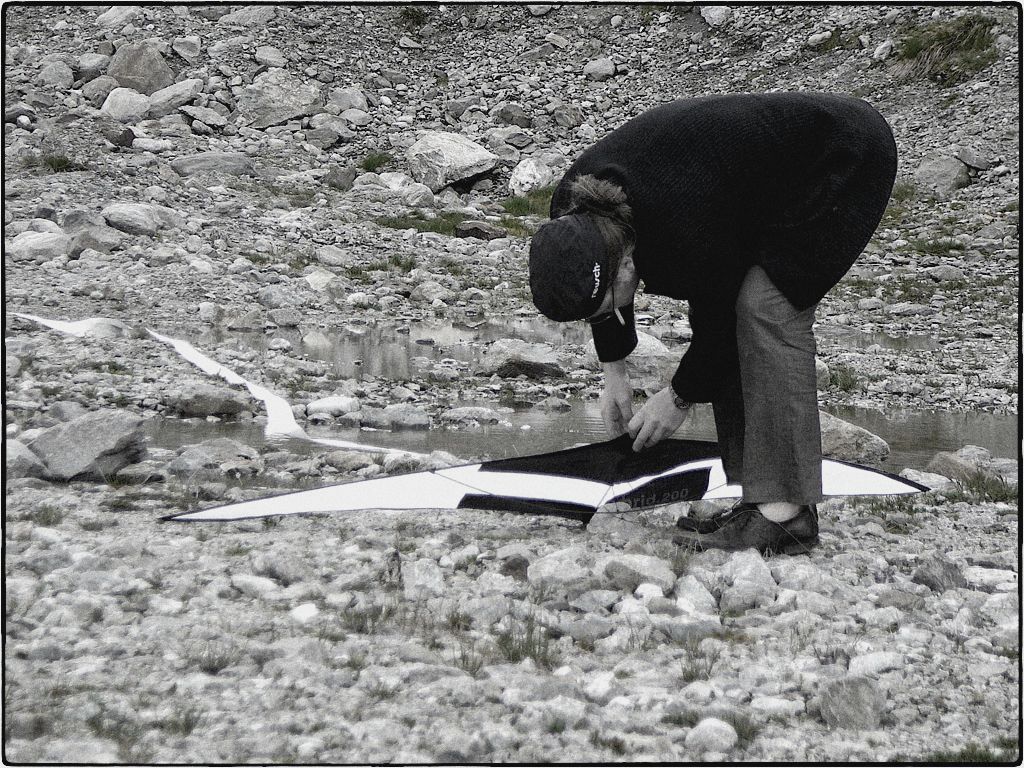
    Thomas Horvath with a hybrid 200 licence kite.Thomas Horvath prepares the hybrid 200 license kite for the start.

    Kite starting on stones: hybrid 200.Unfortunately there’s no wind at all right now. Kite: hybrid 200.

    Kite with a 60 m long tail.The tail attached to the kite is 60 m long, hard to start, but when lifted by a bit of wind, beautiful.

    Highly efficient kite, icarex edition.Zero-wind-kite: the long way home handling compact stradale, White Film Edition, today Icarex Edition.

    Ultra-zero-wind-kite floating on thermals.Only our kites can do this: the long way home handling compact stradale floating on thermals.

    3 lightwind kites above the mountains in normal wind.Pat, Franco and Horvath are flying a bit, wind: normal. The kites: lrs standard, urban ninja, urban ninja the bad. © Markus Egger

    A typical light wind kite and a typical zero wind kite in a mellow breeze.A typical light wind kite and a typical zero wind kite: Horvath’s urban ninja 73 104% and Pat Hug with her like a rolling stone standard. © Markus Egger

    Material test with a workshop kite: sticky wing Spectra Dyneema.The sticky wing is one of the kites, which we make in workshops. Here we are testing an extreme sail-material.

    Cube-kites: tests in the mountains with wind.Several cube variations by Markus Egger. All of these kites need consistent, rather strong wind.

    A light wind kite with an extremely long tail in the Swiss mountains.The tail attached to the kite is 4 and a half inches wide and 200 feet long: the urban ninja.

    A hybrid 200 kite floating near to the ground above a stone flatland.Kite: hybrid 200. Three models were produced and distributed by hq Invento, concept and design by Thomas Horvath.

    High start of a large zero-wind-kite in front of the glacier.High start in front of the Stein-Gletscher. Kite: the long way home, 2.74 m.

    Large zerowind-kite in front of rocks.Zero wind kite, wing shape: the long way home in neon, 2.74 m, 110 g.

    The little kite floating in front of rocks: c'est la vie, darling.Small kite and big rocks: c’est la vie, darling. This kite was available as a part of the set “i’ll be back, darling”.

    The transition from the high start with a zero wind kite to the horizontal gliding mode.The transition from the high start to the horizontal gliding mode. Kite: the long way home.

    Parking space barbecue with Citroen XM, but without kites.Tiger, Thomas, Rita and Jürg. In the air: Gregor, Markus ll, Josef, Iris, Franco, Patrizia, Michael, Lara and others. @ Markus Egger

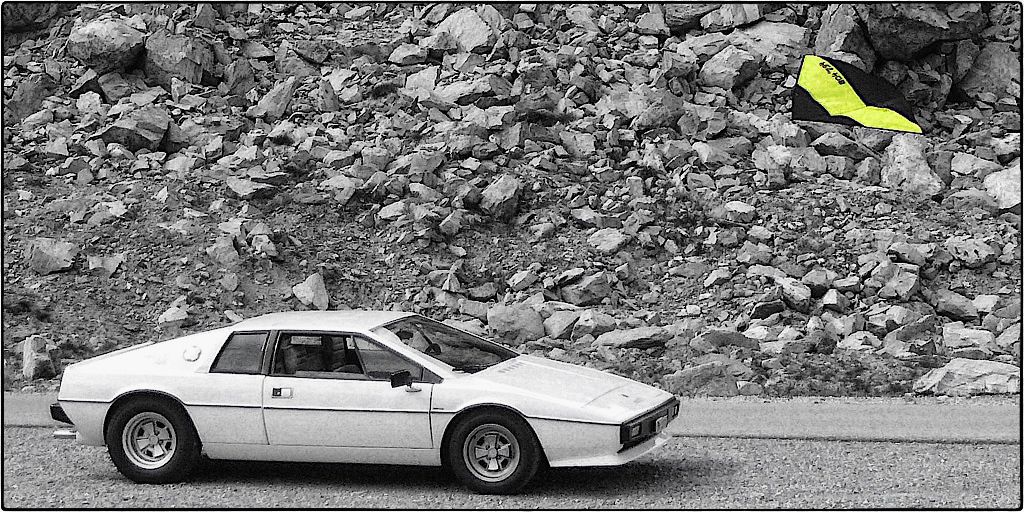
    2 classics: sports car and lightwind kite: Lotus Esprit and urban ninja.Tiger’s Lotus Esprit 007 and the classic light wind kite urban ninja ul. © Markus Egger

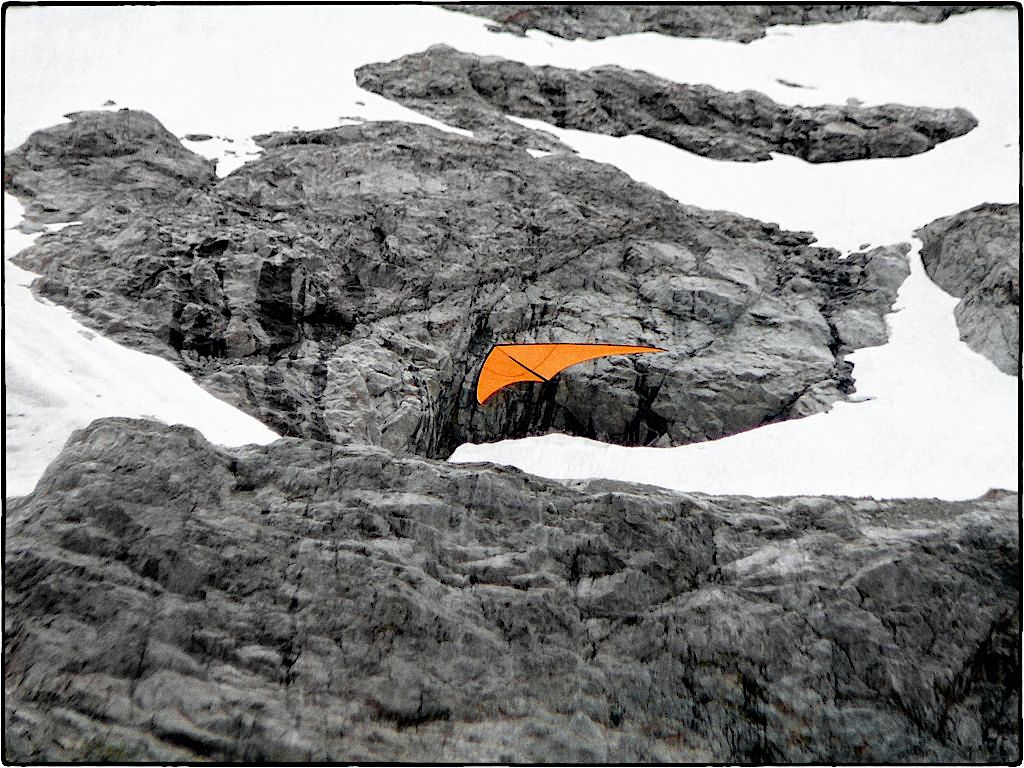
    A synergetic-zero-wind-kite in the updraft of warm rocks.A synergetic-zero-wind-kite in the updraft of warm rocks: the long way home in fluo orange. Flight altitude 500 feet.

    Kite in the mountains, before the storm.The weather can get rough high in the mountains, but very beautiful too, or both at the same time. Kite: “hybrid” by hq Invento.

    A kite in mint, in the background the similarly colored Stein-Glacier.In the evening. An upcoming storm told us to drive back to the flatlands. Thanks all for these delicious weekends! © Rita Emmenegger

  • Kites in Cervia

    Kite festival Cervia, zero wind kites

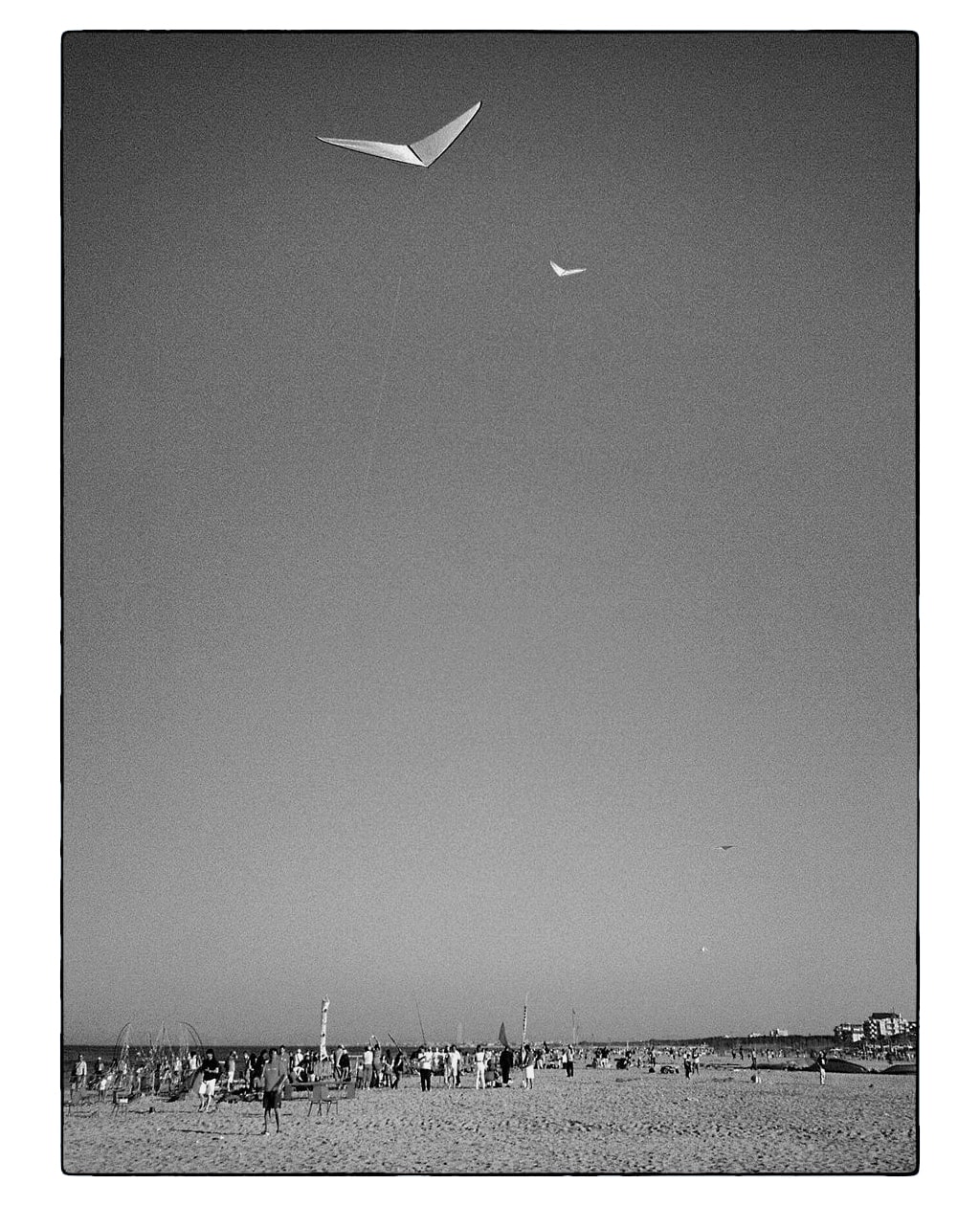
    We use to visit the kite festival in Cervia with joy, founded by artist Claudio Capelli. In the earlier years, the international meeting was situated on the wide large beach in the middle of the small town with its characteristic streets shaded by platanes. Later the festival was moved to the southern part of the town, where the beach is confined and narrow. We met many interesting people and won friends down there at this beautiful place at the flat coast of the adria. If you have time, visit Cervia.

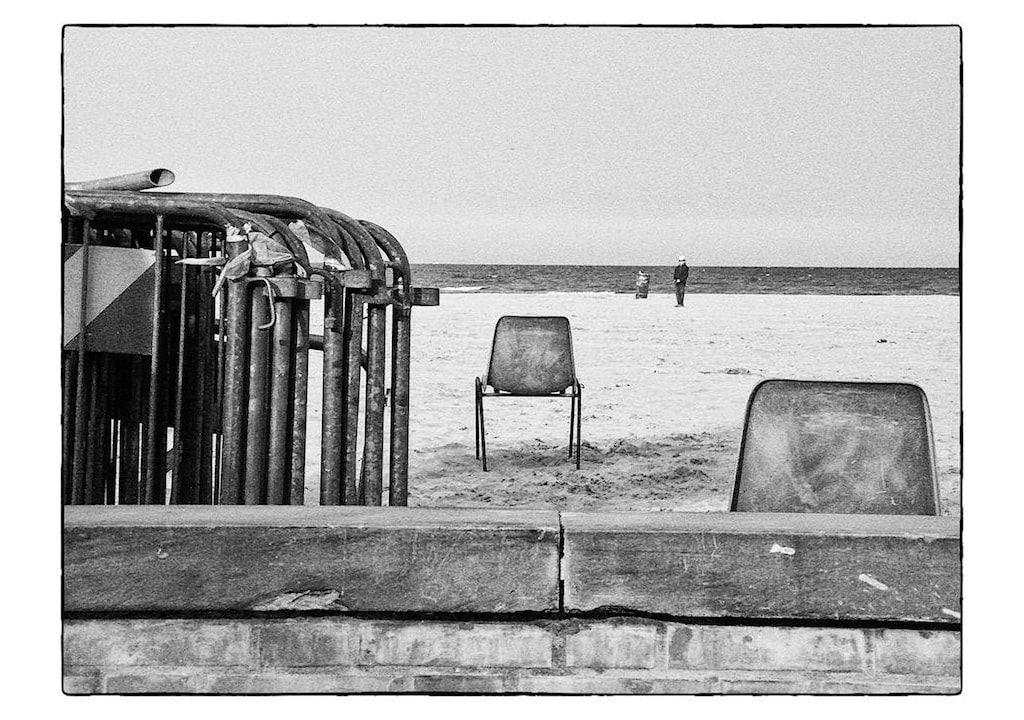
    Kite festival Cervia: chairs on sand.The day before, in the evening …

    A poster kite in portrait format with the kite festival logo by Claudio Capelli.The festival kite by Claudio Capelli, Cervia. The frame of this classic “poster-kite” is built up by a stiff spine and two differently long flexible spreaders. Usually, the tail is a “U”, attached at the two lower corners. Being small, (e.g. 50 x 70 cm), the little kite flies quite steadily in sufficient wind.

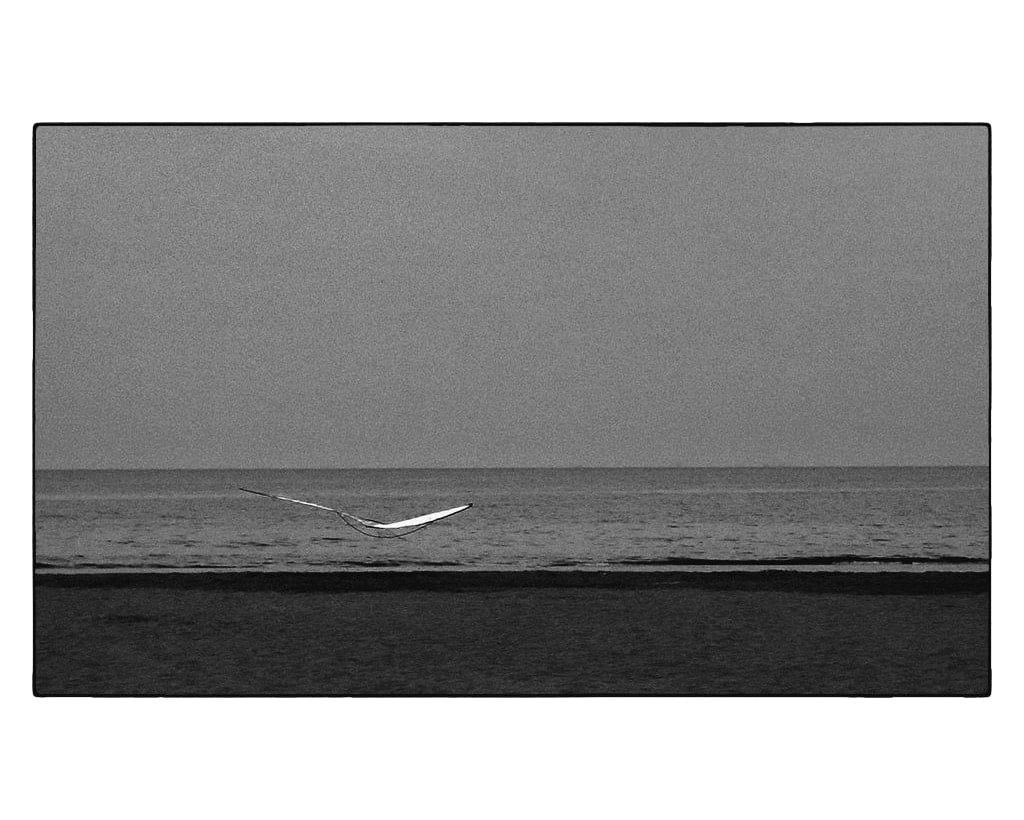
    A smooth fly away on a calm evening in Cervia, in the background the thinker walking.The kite and the thinker. Like a rolling stone.

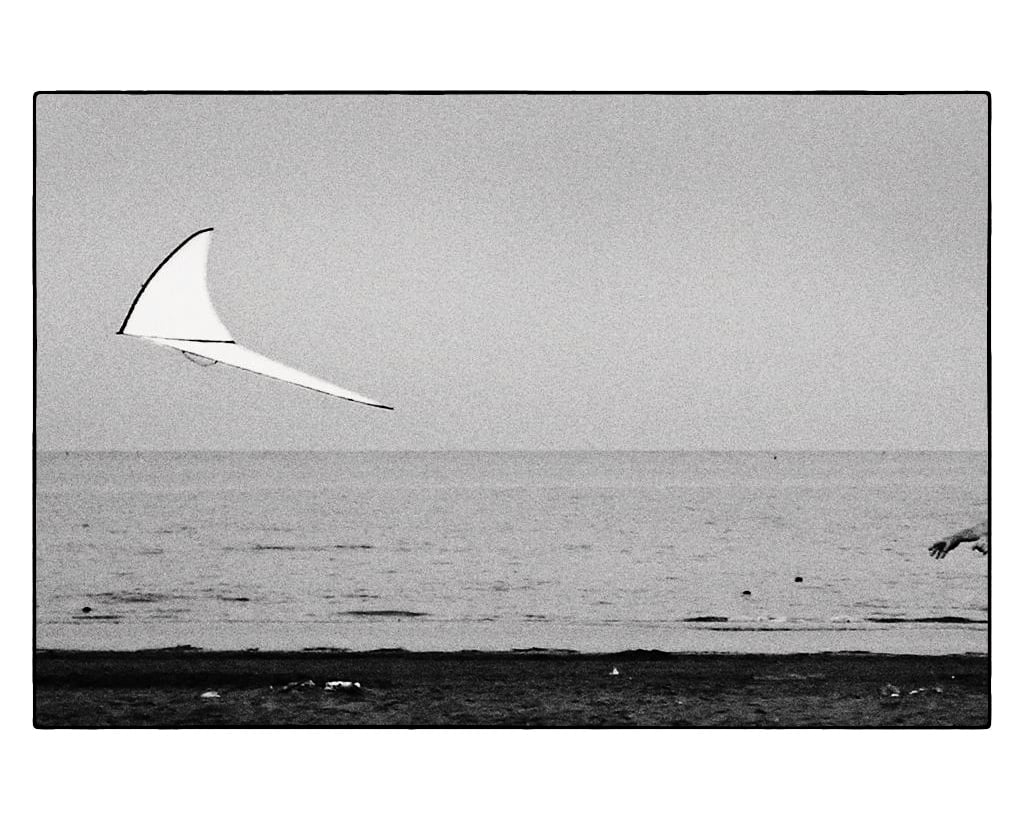
    A hand of Thomas Horvath, holding the line.The kite, the sea, and the hand.

    A white Horvath kite gliding above the Adria shore in Cervia.On a calm evening at the Adria.

    A white kite and the hands, which control the motion.Kite: the long way home.

    A small kite made of birds feathers by Johan Hallin.Feathers by Johan Hallin: beautiful kites.

    A white lightwind kite with a long black and white tail.A 50 feet long tail with an attached kite. Relaxing in the cooling light winds … c’est la vie freestyle.

    4 zerowind kites high up on a calm evening at the kite festival in Cervia.Andi Malandi from Vienna, Thomas Horvath, Jürgen Weigand from Germany and Tullo Lolli from Bologna soaring around in no wind on this only calm evening of the festival. Kites: three long way homes and Tullos white like a rolling stone ul.

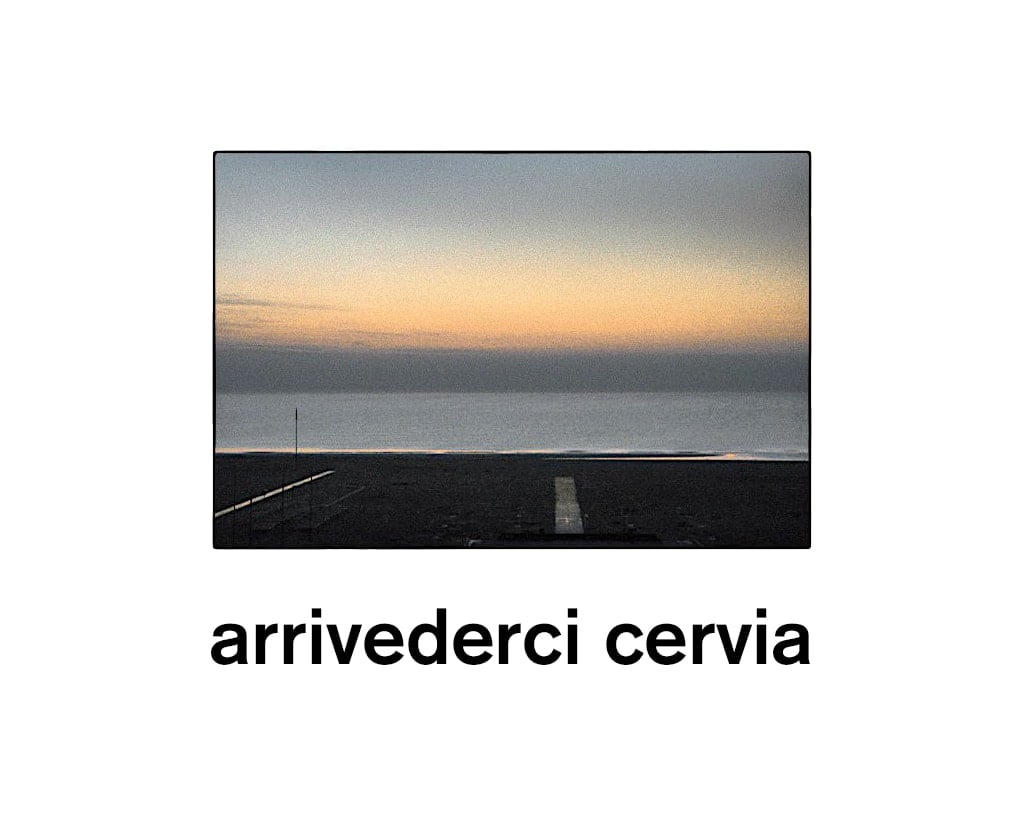
    A white kite landing on the sand coast in Cervia.And home again: arrivederci Cervia.

    No kites here, but a beautiful sunrise in Cervia 2006.Two beautiful days, then consistent rain and storm. No kites back then, but this marvelous early morning at 5.30.

    Kite festival Cervia: The last visitor alone at the beach.The day after, morning …

  • Kites in China

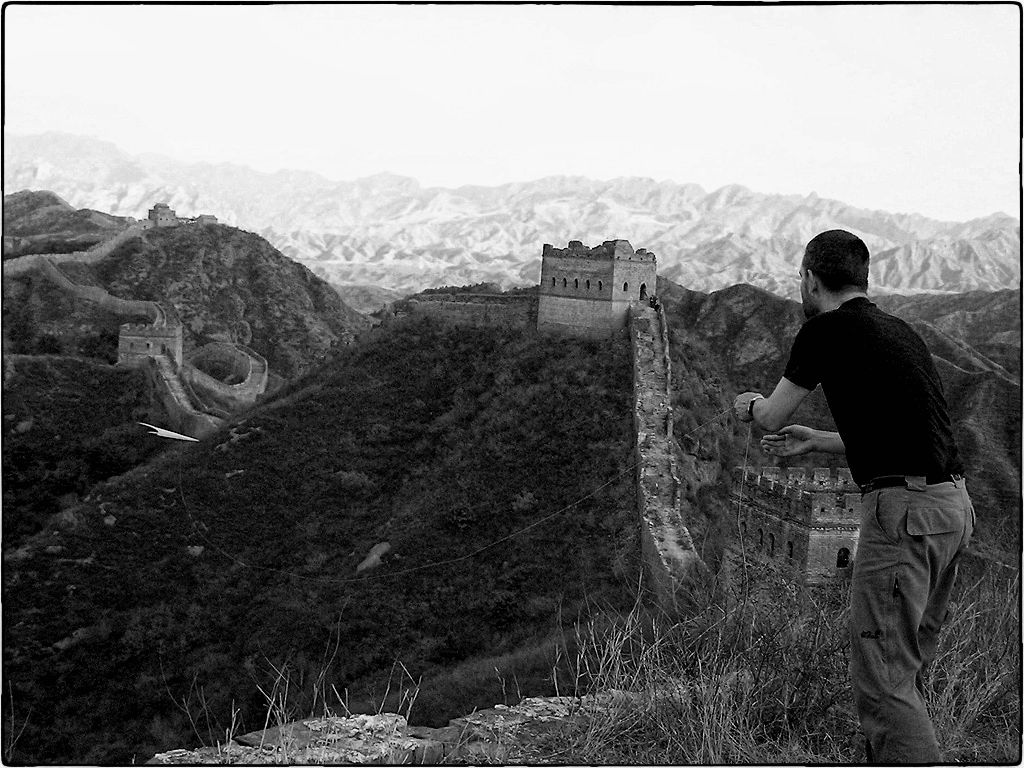
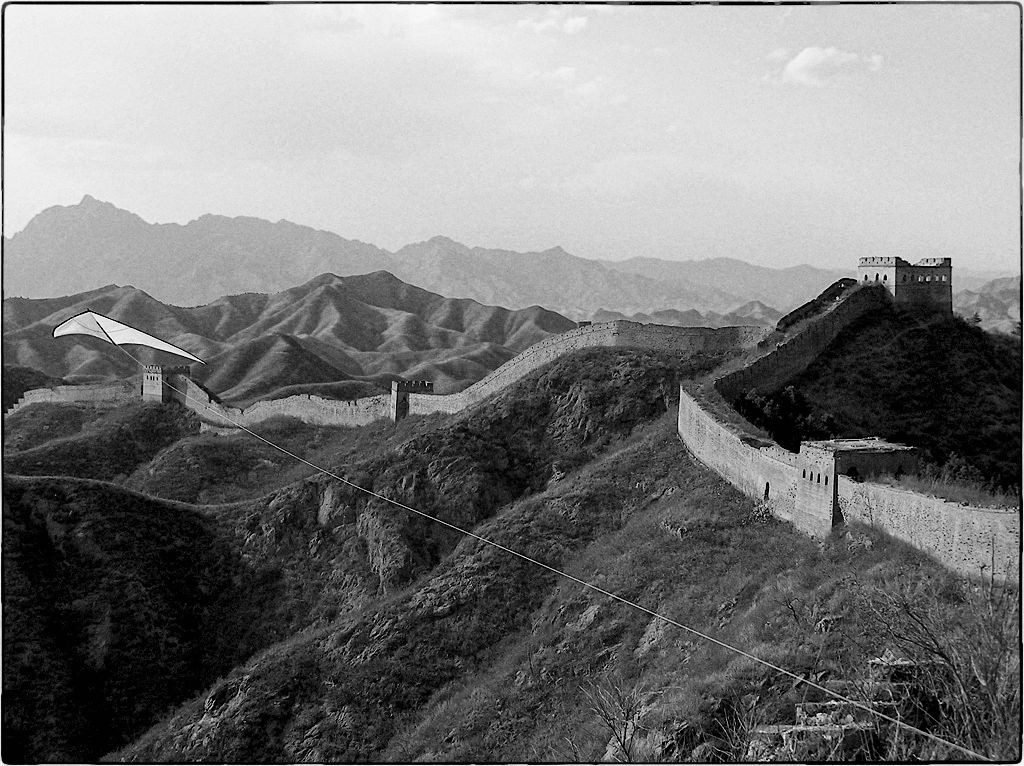
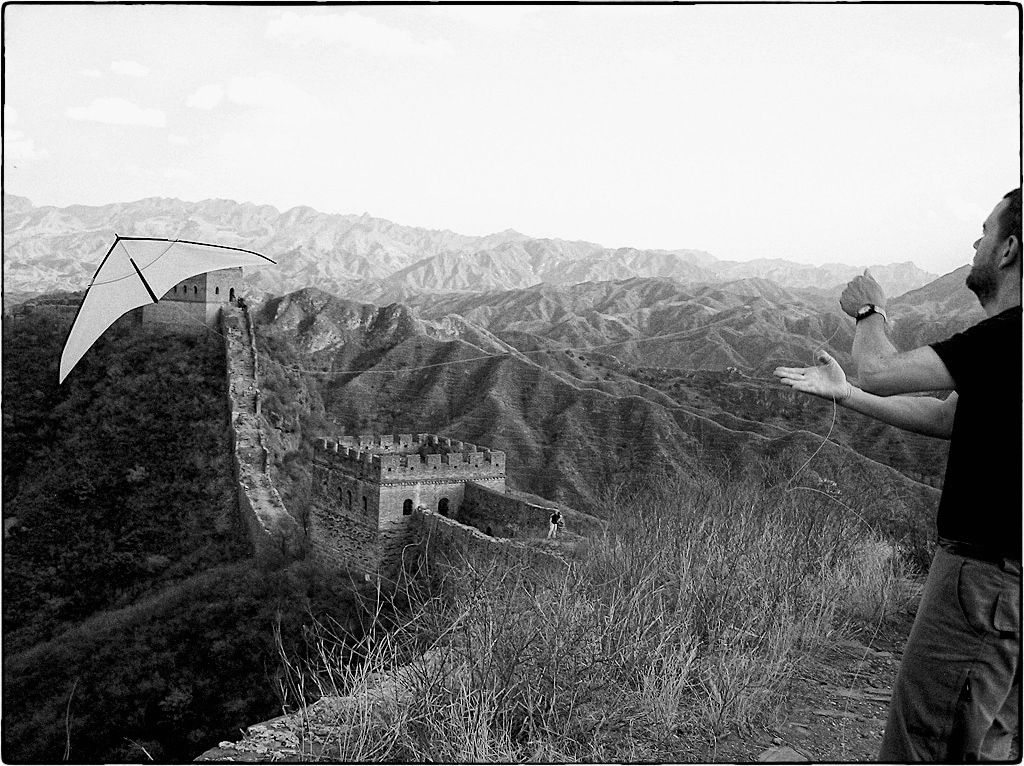
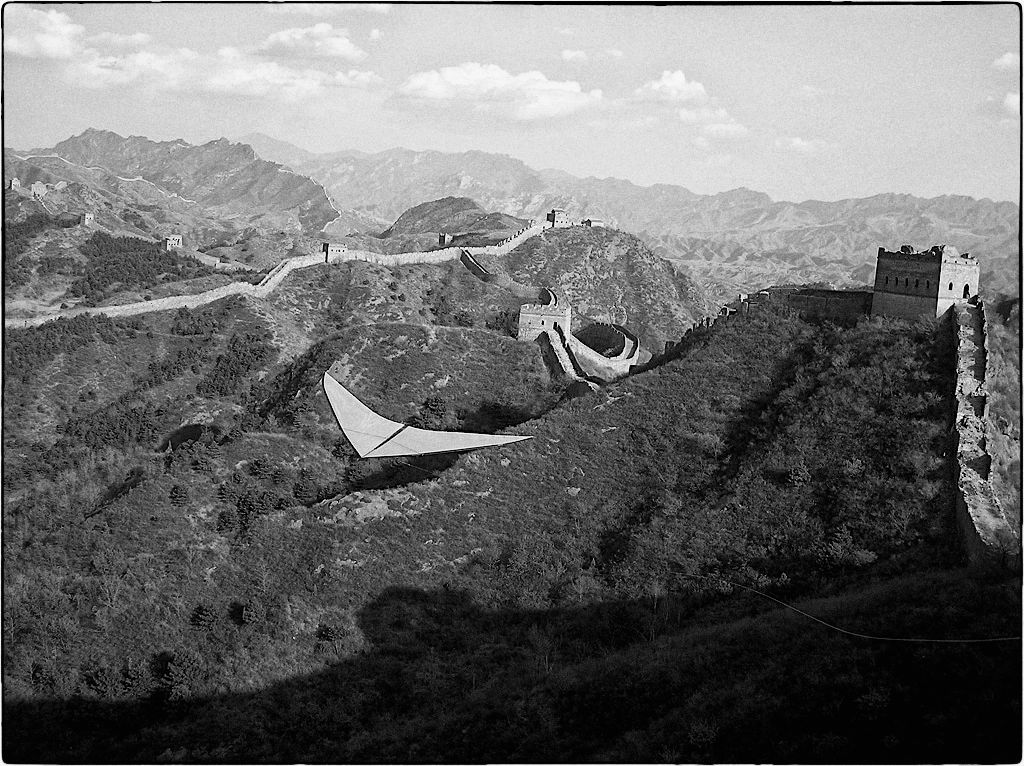
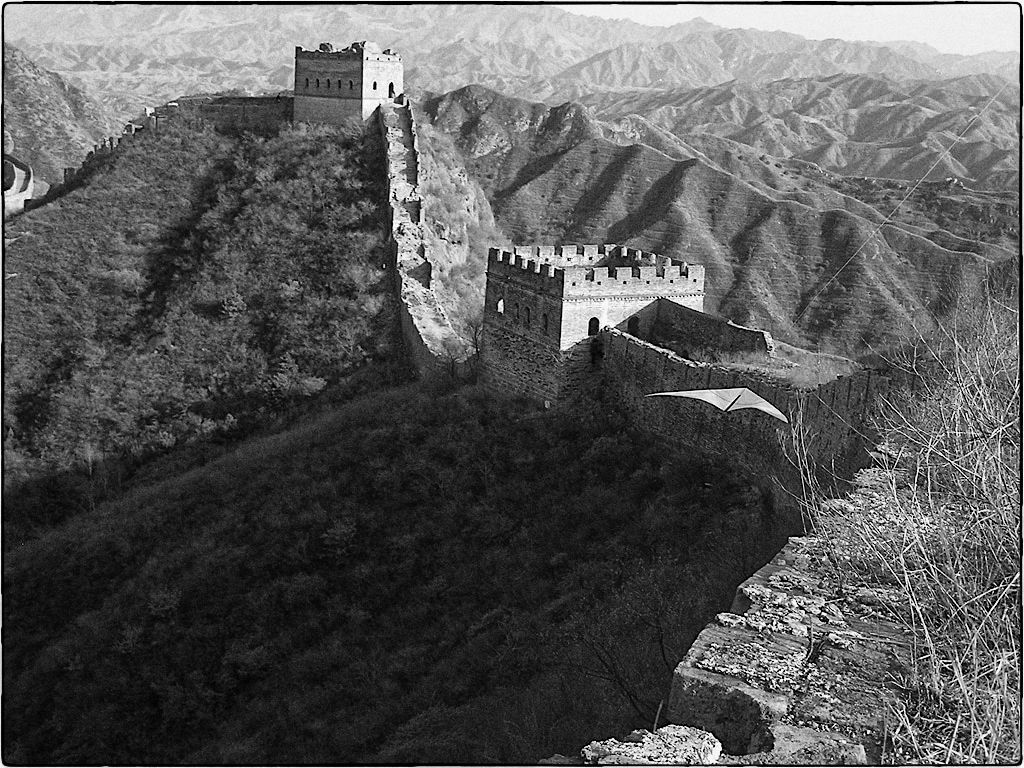
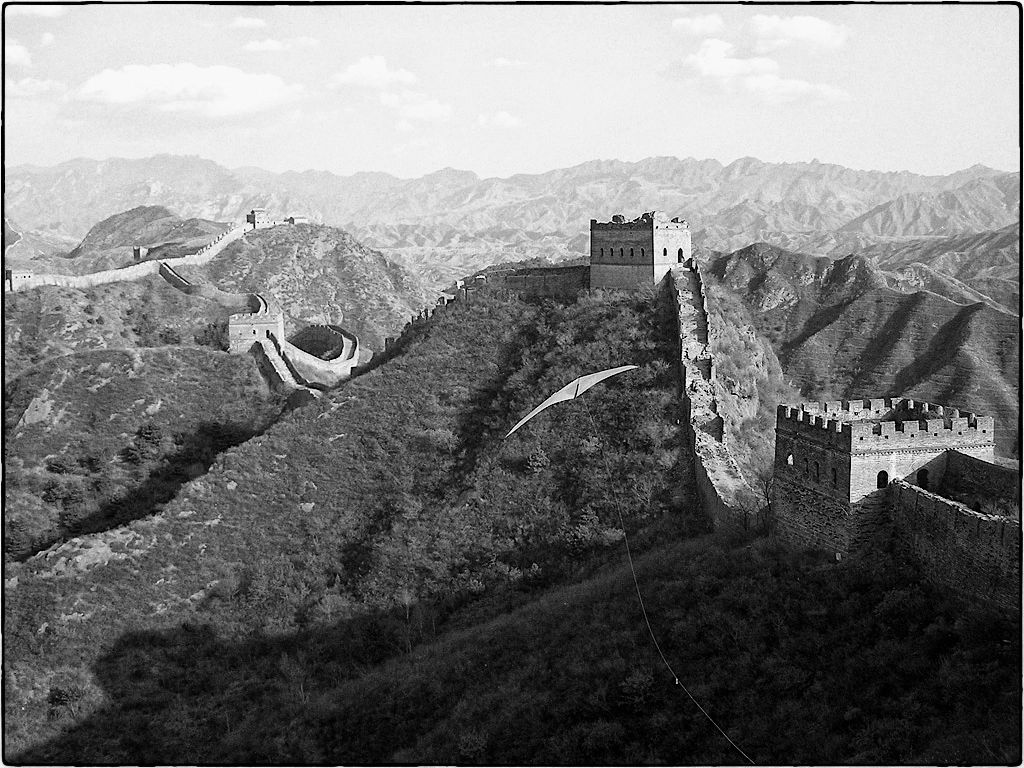
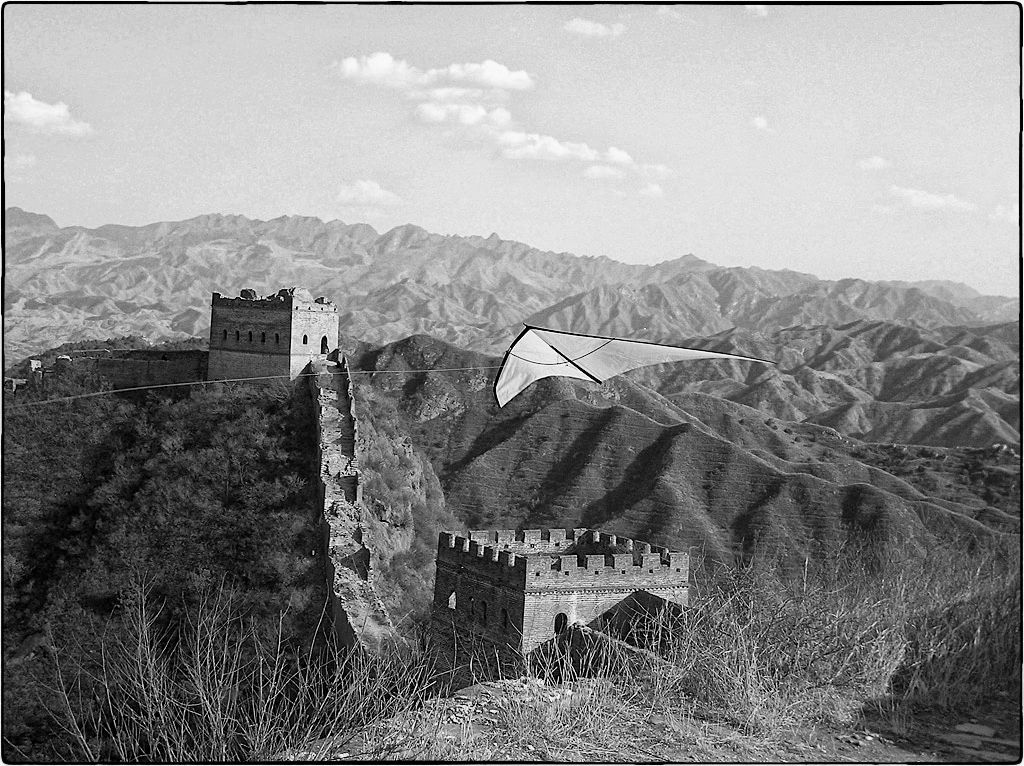
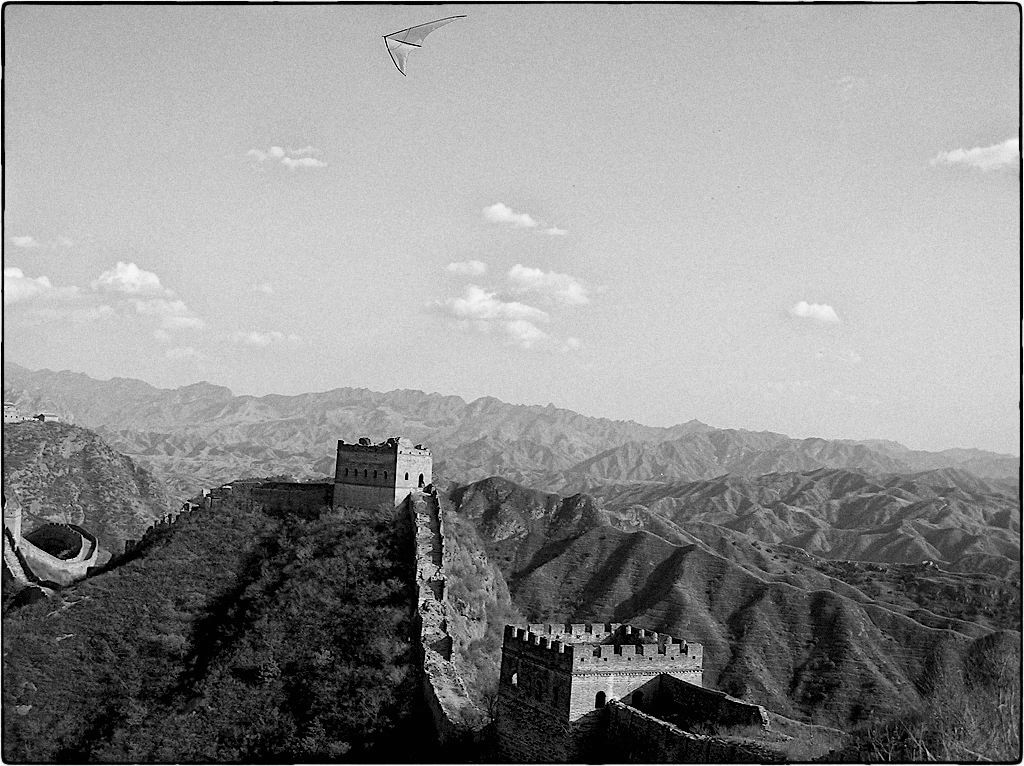
    Synergetic zerowind kites above the Great Wall

    A kite journey with some friends of the Kite Club Wehntal Zurich: René and Dominique Maier kindly made the pictures available for us. They flew with these zero-wind-kites: c’est la vie freestyle, c’est la vie gran turismo and a special urban ninja for the highest flight competition at the kite festival of Weifang. All pictures © Dominique Maier


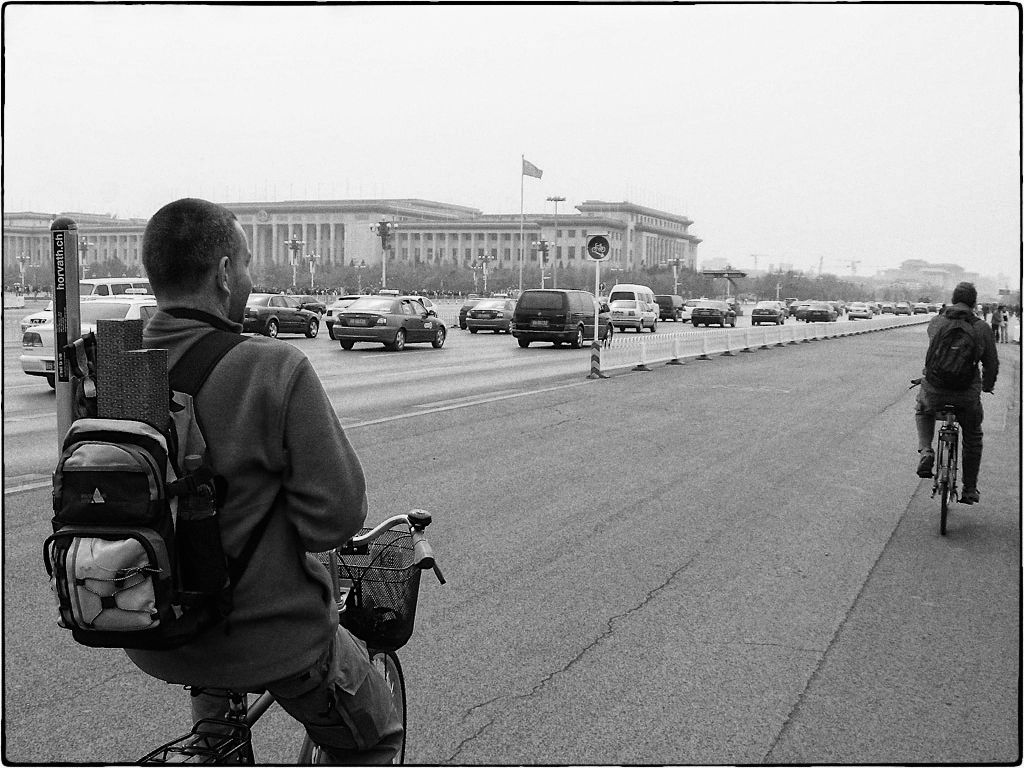
    A kite journey: start in Beijing.On the road in Beijing, near Forbidden City.

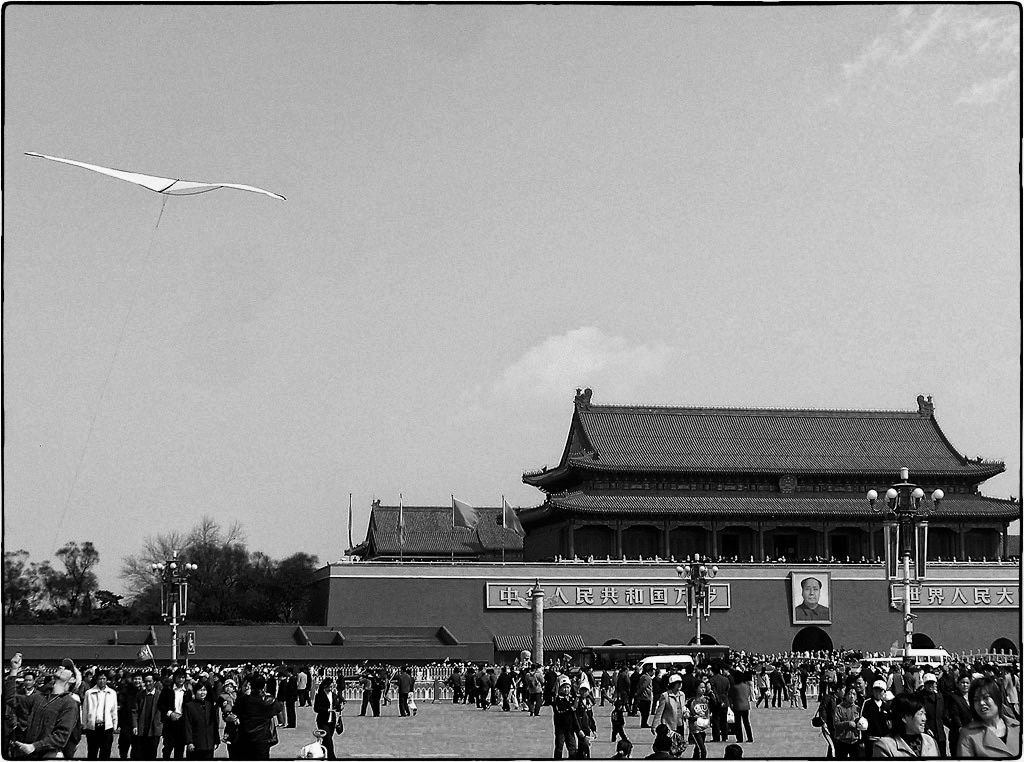
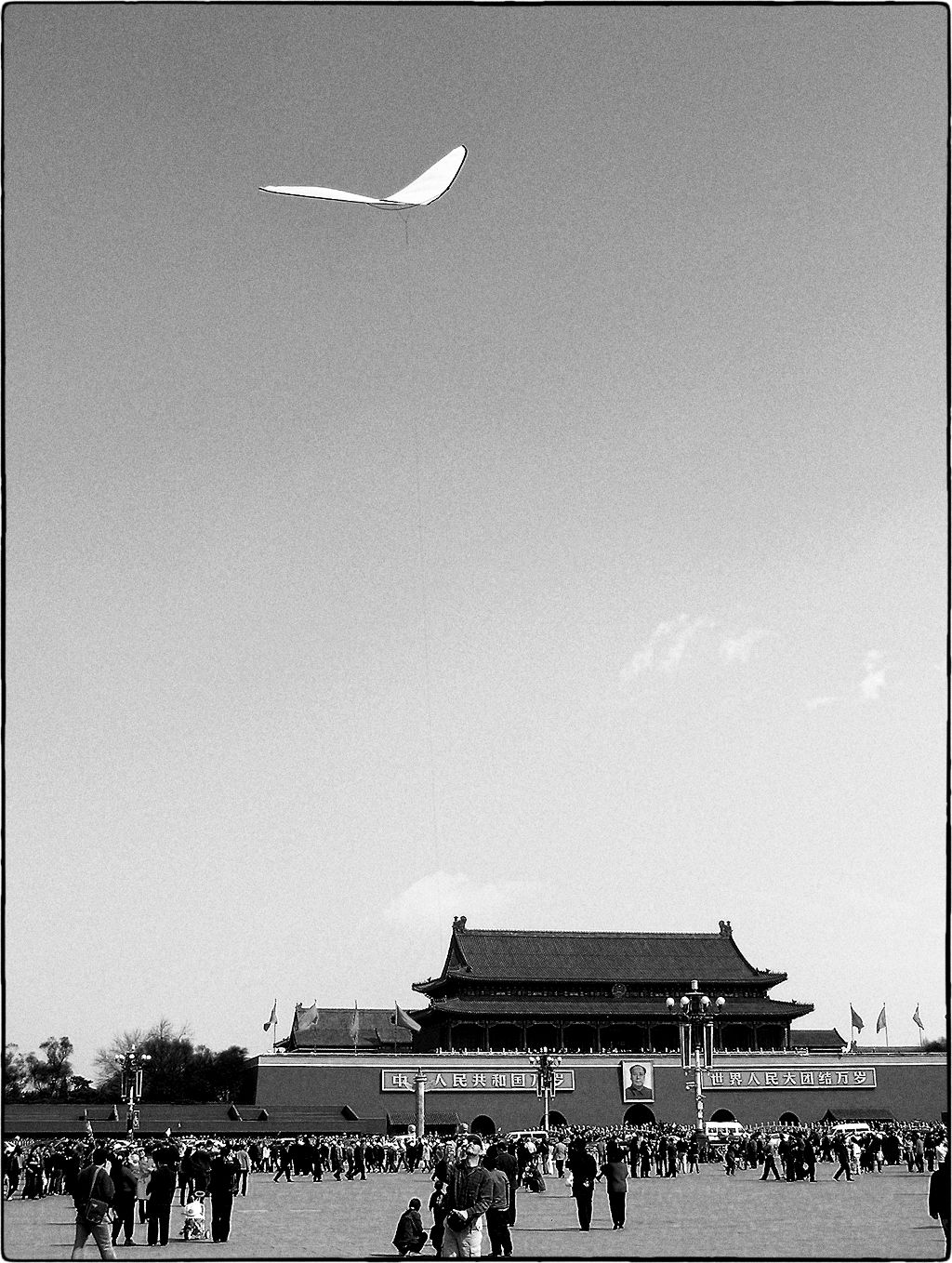
    A white kite floating above Tiananmen, Gate of Heavenly Peace.Tiananmen, Gate of Heavenly Peace. Kite: c’est la vie gran turismo.

    Kite floating without wind very high above Tiananmen square.c’est la vie gran turismo above Tiananmen.

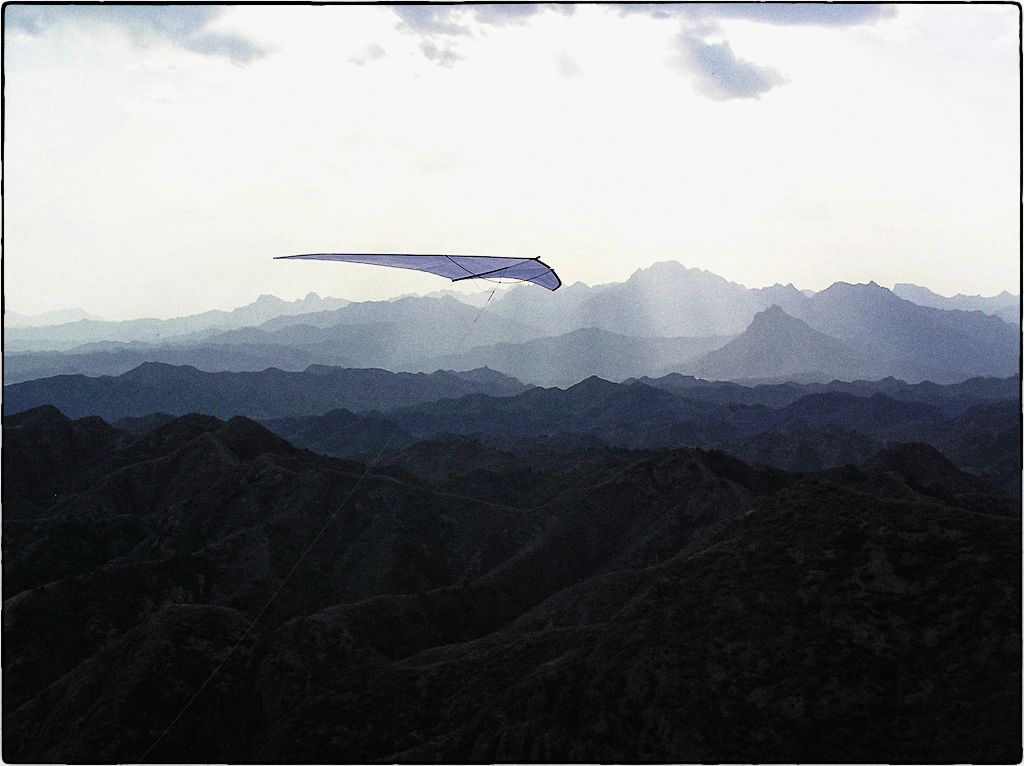
    Soaring on thermals with a light wind kite, China.Thermals over the five meter wide wall in the calms of this evening.

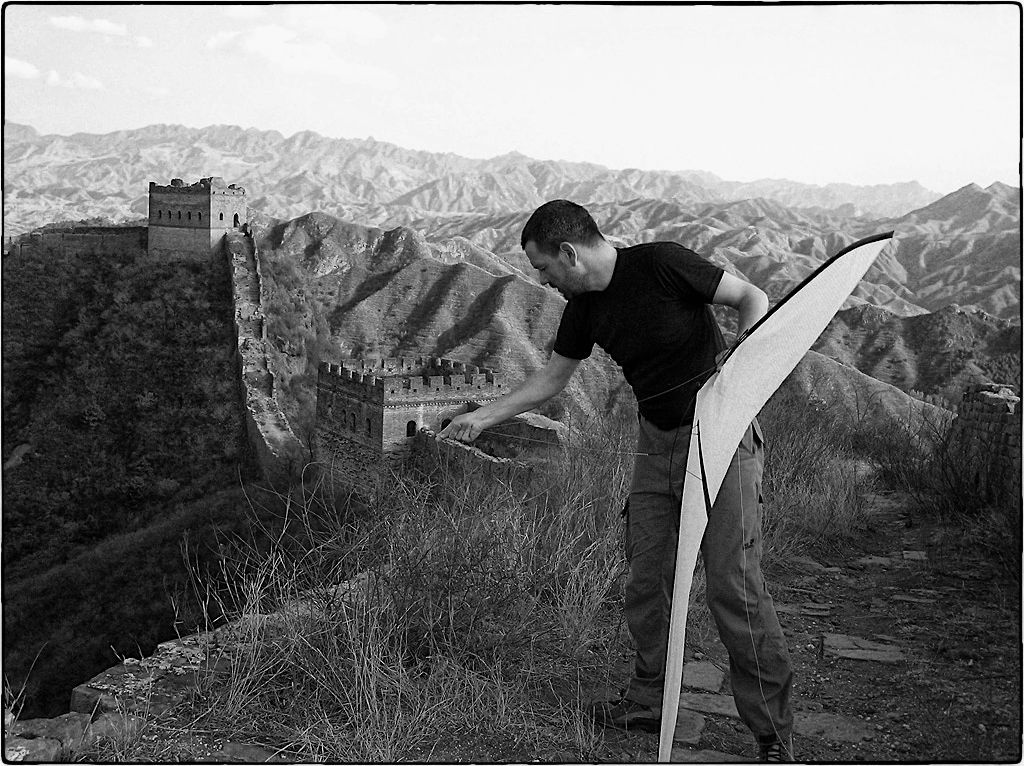
    A white kite on the Great Wall near Jinshanling.On the great wall near Jinshanling.

    A white lightwind kite gliding, China.René is flying an elegant style without wind.

    180 flatspin with a single line zero wind kite.Setup just before a 180 flat-spin for the following fly away.

    Tilted attitude of the zero wind kite.The tilted attitude of the kite helps with diverse inputs.

    Kite glides along the Great Wall.At the next moment, the kite will lift its nose upwards.

    The photos of the kites in China are black and white.Kite: c’est la vie gran turismo white.

    A flatspin with a white zero wind kite.Slack in the line for the flat-spin, but it’s by far not enough yet.

    Rising sequence with the lightwind kite.Start of a neutral rising sequence.

    A lightwind kite high above the Great Wall of China.Looking for some air movements now.

    A c'est la vie freestyle zerowind kite above the mountains in China.Kite: c’est la vie freestyle.

    Kites in China, the last photograph, color.Many thanks to René und Dominique Maier for the marvelous pictures. © Dominique Maier

  • Once upon a time

    Things by the Kite Lab

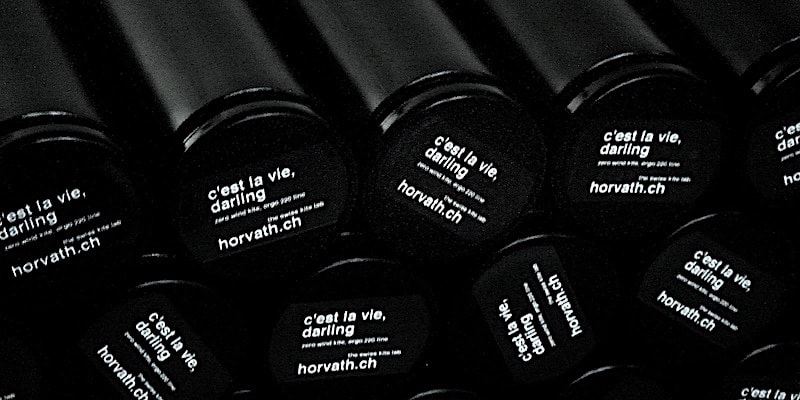
    The Tubes of our kites until 2005.The Tubes were made of thin wall aluminum until 2005, with round caps. Expensive in production. Today, they are black PE, lighter, scratchproof and also made in Switzerland to our specifications. All of the Horvath kites come in the Tube to ensure flawless shipping and to protect the kites in everyday urban use.
    Environment friendly pe Tubes for our kites.Instead of aluminum, now from 2006 environment-friendly PE Tubes, still ø 50 mm. The round caps were a bit too heavy and, of course expensive. Nowadays, everything is lighter, highly optimized and still 100% Swiss made.

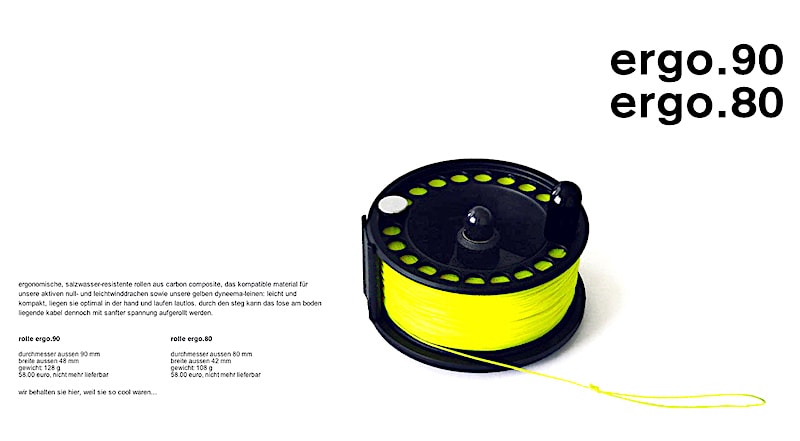
    Kite Tubes for a company, a small edition.This was a test on the first series of this kite, labeling the Tubes on the front side. Quite handy to overview for a collector, but this layout was not very compatible with our packaging procedures.The light carbon reinfoced kite reel.The ergo kite reels were products modified by us and complemented our kites and the zero wind flying style perfectly. Carbon-reinforced ABS. Ergo.80 was intended for ladies. They aren’t produced anymore since 2006 and no longer in our product portfolio.

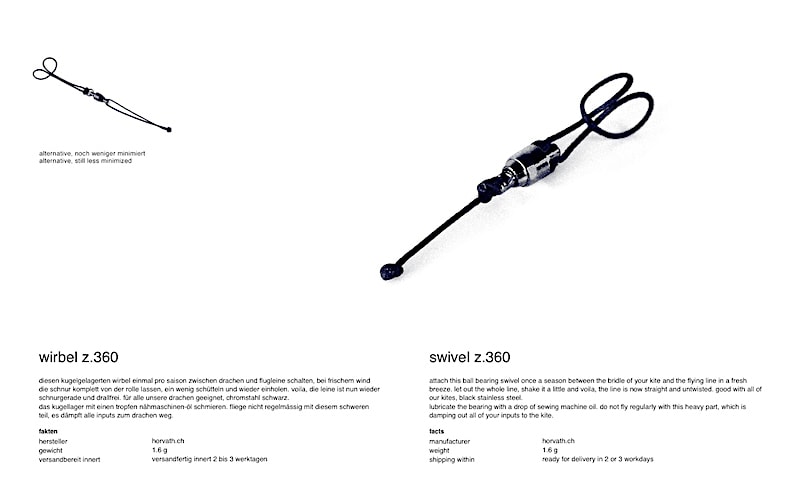
    Ball bearing swivel for zero-wind kites.The ball bearing swivels were, although very small, too heavy. A swivel isn’t really needed at zero wind flights. Maybe for the maintenance of the flying lines once per season.

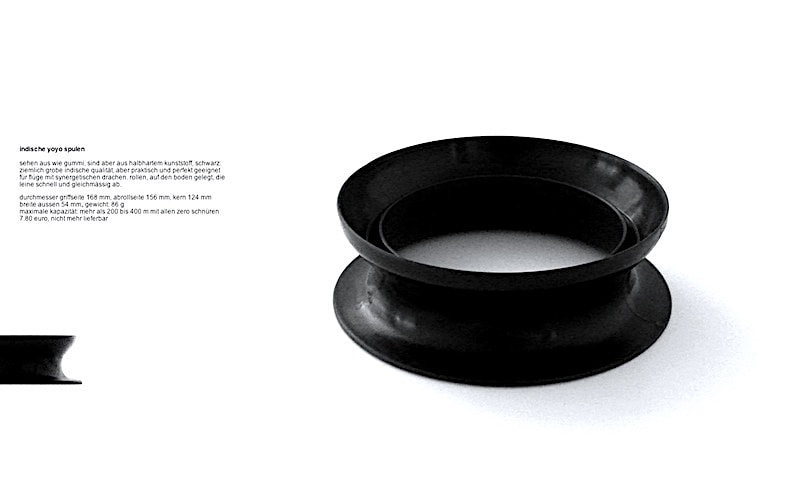
    Large black yoyo kite reel, for a lot of flying line.The yoyo reels are also available from the original manufacturer Gator-Reel, of course. They are of smoother quality, a bit heavier and harder, but that’s not exactly the goal for our purpose. Today, our zero.124 reels are more handy and compact. The long flying lines come on a zero.124, the short ones on the Microwinder™.

    Orange urban ninja: kite burnout.Demolished at a night flight show in Potsdam: a rotating 3 minutes sun was attached to the kite. Once upon a time there was an urban ninja.

    The atelier for the kite production until 2013.At this place, the synergetic zero-wind kite was invented, developed and born. The former atelier, where we started the zero-wind kite business and used to manufacture our kites, at the Fluela Street 54, 8047 Zurich. During summer, it was hot inside, despite a lot of beautiful concrete. Now, in the new atelier, a couple of blocks downstreet, it’s a bit cooler, calmer and there’s even more concrete.


    A couple of zero-wind kite prototypes

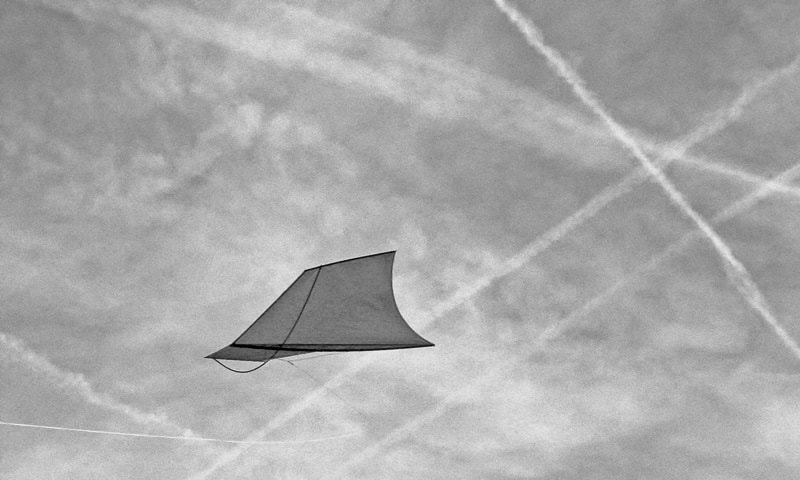
    Prototype Some attempts to truncate the shape of our kites, no success, 2002.Prototype of a kite, in front of contrails.The research objects ended up in our prototypes-archive, but some kite-manufacturers and commercial Facebook hobbyists took the chance to copy this concept anyway, without our authorization, of course. More to come. Don’t support copycats, please.

    Discontinued products and versions

    IBB zero-wind-kite in white film.The sail of the first series of “I’ll be back” and “C’est la vie, darling” was made of white HDPE film in 2007, as an alternative to 0.34-oz Dyneema-composite-fabric, which was called cuben-fiber at the time.
    IBB and The long way home in white Film, today in Dyneema-Composite-Fabric.The first small series of “the long way home handling compact stradale” was also produced in slightly thicker 20g/m2 HDPE film until 2007, and since then in 0.34-oz Dyneema-Composite-Fabric. A couple of years later then also in Icarex.

  • Kites, companies and public relations

    Icarex kite fabric neon yellow

    Some samples of corporate identity colors: Icarex neon

    icarex light green

    icarex light green

    icarex green

    icarex green

    icarex blue

    icarex blue

    icarex midnight blue

    icarex midnight blue

    icarex magenta

    icarex magenta

    icarex dark orange

    icarex superwarmred

    icarex red

    icarex red

    icarex fluo orange

    icarex fluo orange

    icarex light orange

    icarex light orange

    icarex yellow

    icarex yellow

    icarex black

    icarex black

    icarex dark grey

    icarex dark grey

    icarex branding

    icarex branding

    icarex silver

    icarex silver

    icarex white

    icarex white

    1 Kites as a personal present

    Flying a kite, for most people, awakens those beautiful childhood memories. Weightlessly floating through the airs, the kite has its own magic.

    The zero wind kites by Thomas Horvath bring this moments back – thanks to state of the art technology paired with precise craft.

    Irene M. Wrabel, Communications, Zurich

    Personalized kites

    Unique pieces with optional prints on the sail, for example, a personal dedication or a logo, are ready for delivery or pickup within a few days.

    Or get small series, also customizable and available in various colors (your corporate color?): For example, de tomaso honey (wing-design, wing span 1.63 m).

    The kites are made in Zurich and are the lightest possible, Swiss high-tec. They have established zero wind kite flying and floating in the urban environment, being today worldwide prototypical for other manufacturers too.

    2 Communicate with kites

    Thomas Horvath has invented kite flying without wind. His ‘active kites’ stay in the air, because the pilot is giving the right impulses via the line. And because the kites are precise constructions made of hi-tech material.
    As a designer, Horvath is looking for the perfect balance between air and kite.Urs Honegger, Hochparterre Magazine for Design and Architecture

    Advertise with lightness

    Synergetic kites are a high-quality advertising, in small to medium series, with optional prints on the sail. The time of manufacturing a series is slightly longer than for just a couple of kites:

    Maybe de tomaso superleggera, a compact-delta-design with a wing span of 1:33 m.

    Communicate with high quality, exclusive and sustainable advertising media: Swiss design, Swiss engineered and Swiss made.

    3 Float and be amazed

    The clv Darling arrived yesterday and after spending several hours in total excitement in the office I was even able to fly the kite in the middle of Budapest.
    And then a love affair was born in the park. The experience was simply unforeseen. Pure magic.

    Gergo Kiss, Budapest

    Events and installs

    We come to you with several ready to fly kites, which can be flown by all. And we show how, briefly. So that really everybody is floating for a while, at your indoor or outdoor party. Or we construct a floating-installation for you, temporary or permanent, art or not.

    A kite with an individual print on the sail, ETH Zurich.
    Kite: de tomaso superleggera with custom print. PR for a research project at ETH Zurich. © Christian Panse

    4Planning together

    Contact Thomas Horvath by e-mail to clarify first questions or, if desired, to make an appointment for a first straightforward meeting in the studio.

  • Videos: zero wind kites by us

    The long way home on Furka

    https://www.youtube.com/watch?v=09S-cuI51_I?rel=0&showinfo=0&fs=0&color=white&start=15/

    Take offs, dives, flatspins, fly aways, glides and just soaring around on a cool evening in fall, zero wind. Kite: the long way home in the standard factory setup with original skyshark 2pt framing. The flying line used is a zero.6, which is good on rough grounds.

    The long way home on Susten

    https://www.youtube.com/watch?v=RU2ViN0849Y?rel=0&showinfo=0&fs=0&color=white&start=0/

    Floating around on an evening in summer on 2300 m: thermals, downdrafts, some chaotic winds. Movie by Markus Egger. Pilot: Franco Pinazza. Kite: the long way home with factory setup.

    Thermals: In general, ascending air currents or up wind, carrying a kite vertically upwards. Often generated by insulated warm ground areas such as a dark asphalt place beside a cool meadow, an acre field near a cooler lake or in a small scale above a dark roof, heated by the sun. Lovely moments, when a long way home or the urban ninja are floating on the spot or circle upwards doing flatspins.

    Like a rolling stone ul in Leipzig

    https://www.youtube.com/watch?v=7L0iSTwy4fw?rel=0&showinfo=0&fs=0&color=white&start=10/

    Reinhard Bügemannskemper and Ralf Elias are flying in the exhibition hall at the Leipzig fair. Kite: like a rolling stone ul with standard factory setup.

    Large single line indoor kites can be flown well in larger inner spaces. Beside a light weight of the kite, a good indoor handling is achieved by agility and slow movement. Long airtimes due to a minimal sink rate and modest need for space are imortant.

    Like a rolling stone ul was designed to meet the mentioned factors as a dedicated large indoor kite. It doesn’t perform the infinite glides of the long way home, but delivers maximum airtime values as a result of its minimal wing loading in horizontal floating and its overall ultra light weight. A classic slow-down aerodynamics design.

    A short indoor flight at Empa

    An interesting evening at the Empa center for synergetic structures. The landing is not perfect, but we had fun. The obstacle on the floor is an ergo.90 carbon reel, which is no longer available.

    Kite: c’est la vie gran turismo … un peu a bout de souffle.

    We adjusted the kite to fly shorter glides and tighter flatspins by slackening the sail a little bit. However, it demands broader spaces for its long glides, in which it will develop its strong lift. That’s what it’s designed for.

    At a similar wing span, the ultra slow “the long way home hc stradale” performs flatspins around a point within its wings without losing height. Because it’s so slow, there’s time enough to stay relaxed. The compact indoor-kite “i’ll be back” is designed for flights in even more confined space such as in the office or atelier.0

    The urban ninja on snow

    https://www.youtube.com/watch?v=FlRCq3QZuos?rel=0&showinfo=0&fs=0&color=white&start=0/

    The urban ninja on the Melchsee Frutt lake, a couple of degrees below zero. Fast moves in the Swiss alps with the lively freestyle single line kite. It can be flown much more relaxed in warmer conditions.

    Setup is factory standard, the flying line is a zero.6, flown at 15 to 70 m. Wind: zero. Frame rate of the movie is unchanged.

    This radical freestyle kite is available ready to fly. A lot of people make it themselves with help of this building plan. For perfectionists, we offer sporadically the building set including flying line with the light parts and materials.

    Urban ninja: the bad

    https://www.youtube.com/watch?v=4aPu8G7tGMQ?rel=0&showinfo=0&fs=0&color=white&start=0/

    Even more radical: urban ninja the bad (variations: the smooth the bad and the ugly) lifts off blatantly and flies the loops in Potsdam near Berlin.

    We manufacture this kite for friends and good customers. Some make it themselves using our building plan. There’s no building kit for the kite.

    Like a rolling stone on Gotthard

    https://www.youtube.com/watch?v=8o2VZcVmnqM?rel=0&showinfo=0&fs=0&color=white&start=0/

    In the middle of the Swiss alps: Floating in the swirls around the dam of Lago della Sella above the Gotthard pass, good conditions for “like a rolling stone standard”.

    For some people the Gotthard is exactly the center of Switzerland. For some, incl. Joseph Beuys, the center of Europe, parting south and north, Italy and Switzerland. For me it’s just the archetype of a rough environment.

    Compact delta shape kites like “de tomaso superleggera” feel comfortable in such places too.

    Fresh winds in Schlieren

    Some lightwind kites in fresh winds, Schlieren Zurich. Franziska Felber: the long way home and the ugly, that doesn’t really exist. Daniel Boermann: c’est la vie and like a rolling stone.

    We better should have had a like a rolling stone flow and urban ninjas with us. Also, the consistantly gliding c’est la vie glissando would have been a good choice for flying in this rather tough conditions.

    A test flight in front of the atelier

    https://www.youtube.com/watch?v=x1Myn57hABc?rel=0&showinfo=0&fs=0&color=white&start=0/

    De tomaso honey spectra laminate edition. This kite used to be available for friends and good customers upon request. Today, it’s a part of the hyperlight series, light kites with a sail of Dyneema. The de tomaso honey icarex edition loves also a very floaty flying style and is a bit easier to control.


    Here’s a playlist on YouTube with some other videos of our kites around the world.

  • Videos: kites flying indoor

    Baldrian’s zero wind kite in Kassel

    https://www.youtube.com/watch?v=SWpR6vBYRTI?rel=0&showinfo=0&fs=0&color=white&start=0/

    Thomas Leuenberger aka “Baldrian” on one of the evening shows of his Germany-Tour 2016. Kite: one of his “Like a rolling stone ul special film edition”. Thomas is specializing in slowness, he’s the expert.

    Indoor meeting in Kerpen

    https://www.youtube.com/watch?v=E2StqYA5Ouk?rel=0&showinfo=0&fs=0&color=white&start=0/

    A video by Dietmar Schlottig with the Lwh-hcs aka “The long way home handling compact stradale”. The sail of the kite consists of a special white hdpe-film, which was being produced in Switzerland according to our specs. Today, there’s the optimized Icarex Edition available. Or, for the ultimate flow, the Hyperlight Edition with a sail of Dyneema Composite Fabric.

    Soaring in Singapore

    https://www.youtube.com/watch?v=a4t6Ijb4YEg?rel=0&showinfo=0&fs=0&color=white&start=0/

    The kite in the first video: Hybrid.240. Production is discontinued today. There were 3 different kites available in this series: Hybrid.130, Hybrid.200 and Hybrid.240. The numbers specified the respective wingspans.

    https://www.youtube.com/watch?v=dUSBJnjDMVA?rel=0&showinfo=0&fs=0&color=white&start=0/

    The second clip is showing a Hybrid.200, which is flying less slowly, the kite was a bit too heavy. It’s not easy to control all the details of a mass production kite. In our own manufacturing process however, we enjoy the direct in-house quality control.

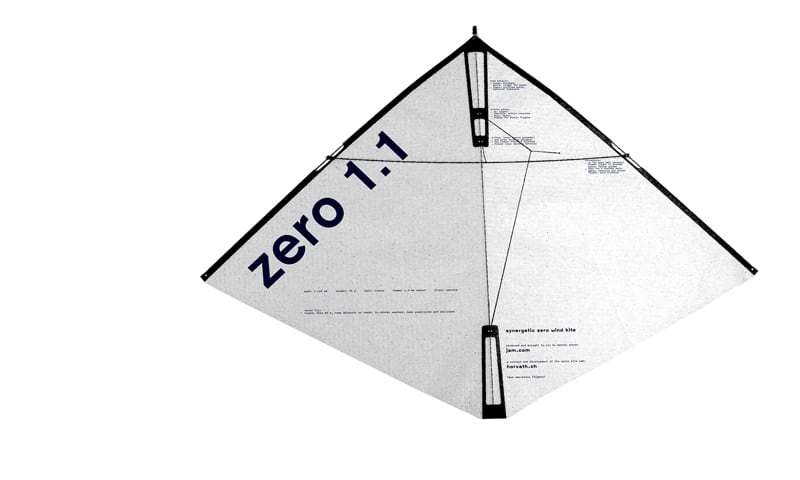
    At the very beginning of the clip, there’s a Zero-1.1 in orange, which was the best-selling zero wind kite produced in license of the Kite Lab™. All the kites here are designs of Thomas Horvath.


    Here’s a Playlist on YouTube with some other videos of our kites around the world, indoor and outdoor.

  • Videos: kites flying outdoor

    after midnight in vitoria gasteiz

    https://www.youtube.com/watch?v=uXpMPJQWoq8?rel=0&showinfo=0&fs=0&color=white&start=0/

    Kite festival in Vitoria Gasteiz, Basque, Spain. A wonderful festival with a lot of very sympathetic kite enthusiasts. I was invited as the protagonist and enjoyed the generosity. Unfortunately, there was stormy weather all days long, but the nights were perfect.

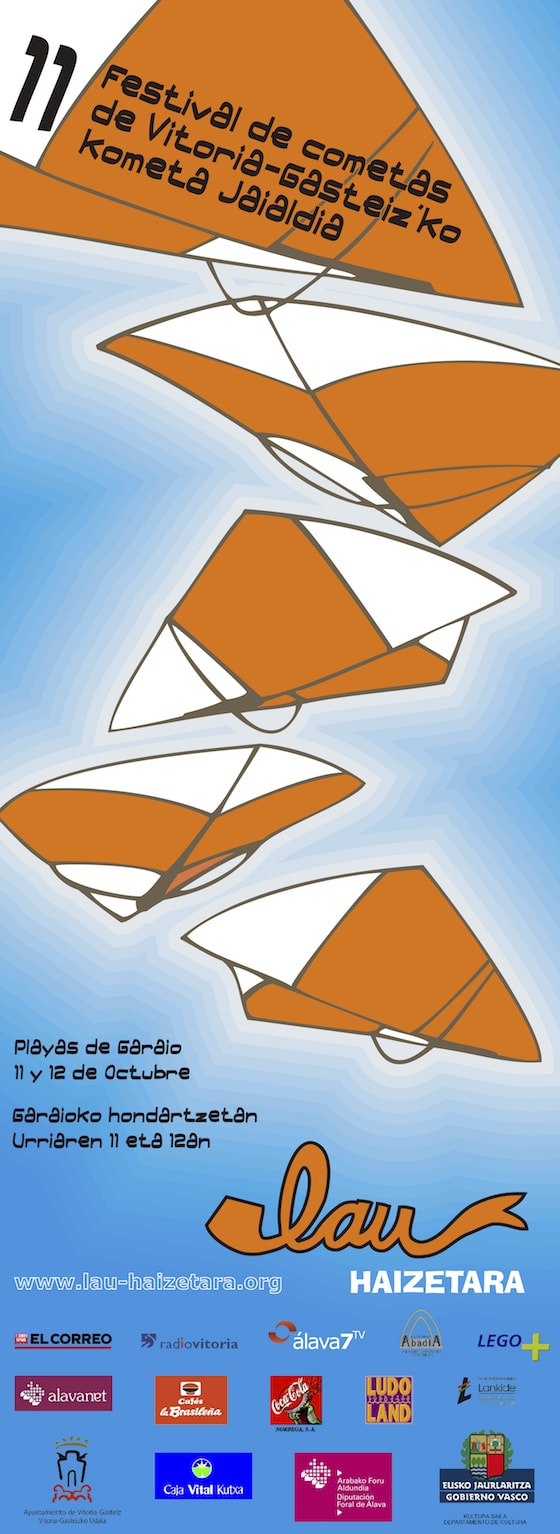
    Kite festival Vitoria Gasteiz: the poster with the festival kite: the urban ninja.

    The poster with the festival kites: urban ninjas. The organizers built several of these kites with diverse orange-white-rhythms.

    Zero-wind floating with “the urban ninja”

    https://www.youtube.com/watch?v=_IeA3D-5h8k?rel=0&showinfo=0&fs=0&color=white&start=0/

    This time still quite urban, but charming in the green. Spain. No idea what this color would be in Icarex, it’s not pink nor rose. Anyway, such a color is not exactly available, if you would order a kite at the Kite Lab™. The flying style is slow and fluid, not quite a typical “urban ninja flight”. It looks more like a “de tomaso superleggera”, which is lighter, softer, slower, and an even more pronounced zero wind kite.


    Here’s a short playlist on YouTube with some other videos of our kites around the world, indoor and outdoor.

  • Some of our corporate customers

    Kites for companies, advertising, events and workshops.
    Small series of light kites for companies, minimal or moderate branding on the kites.
    • MeteoSwiss, Workshops
    • ETH Zurich, consulting
    • Uhuru world music festival
    • SF DRS: Swiss Television
    • Swiss Gymnastics Festival
    • BP London
    • Empa Center for Synergetic Structures
    • University Zürich, research
    • Green Liberal Party Switzerland
    • Ministry of Education Kanton Zurich
    • Cofely gdf suez
    • Universikum: talent program
    • Zurich University of the Arts, consulting
    • Baldrian, the slowest comedian
    • ERP sourcing: SAP cloud service
    • Stadium Wasteland Association Zurich
    • UBS Switzerland, photo shootings
    • Dataphone AG
    • Swiss Life, Workshops
    • Museum für Gestaltung Zurich
    • Radio NRJ fashion show
    • Maker Faire Zurich
    • Kulturlandsgemeinde Appenzell
    • ZHAW Winterthur, Aviation
    • caron. Technical Communication, Basel
    • Enzmann + Fischer Architects
    • Masha Dimitri, guest director Circus Monti
    • THEATRE NATIONAL DE LA COLLINE, Paris

    Kites for communication purposes, team building in kite workshops or floating events: Each of such a project has been a pleasure for everyone involved. If you are interested in kites or similar light objects in the context of your company, please contact us for a first talk.

  • Eleven Grams of Poetry

    Design Award 2015

    Stephanie Rebonati, Hochparterre 12 | December 2015 | Elf Gramm Poesie pdf in german

    Architect and industrial designer Thomas Horvath has designed the lightest kite in the world. It flies without wind and is awarded the first price of “The Best”.


    Left astonished

    Constructed of a breath of nothing, this device delivers a lot. Thomas Horvath’s zero wind kite “I’ll be back” climbs up to hundred meters high and also flies inside a building. If the ground gets warmed, it plays with the thermals and makes energy visible in its flight behavior. With its magic expression, the kite floats extremely calmly and spectacularly slowly.

    Since last winter, the small kite is available with the sail consisting of ultralight spectra laminate. This way it was possible to reduce the total weight down to eleven grams.

    While playing, the kite effects what poetry can do: It makes us wonder and throws us back to ourselves. Horvath invested his longtime experience into the construction of a toy that takes playing much serious.

    Less is more here also: Control consists of leaving the device its own will. This formats the relationship between the object and us in a new way: we become astonished observers.

    Meret Ernst


    The mobile in the foyer of the Toni Areal, Museum of Gestaltung, Zurich.
    Exposition Design Award 2015: The mobile in the foyer of the Museum of Gestaltung, Zurich.

    The original text by Stephanie Rebonati


    Swiss architect and industrial designer builds the world’s lightest kite. The device weighs a scant eleven grams and is the result of technical exploit. Portrait of a constructive poet.

    This thing with the kites – is it sport for you?
    No.

    So what is it?
    It’s a game.

    A game?
    Definitely.

    Tell me about it.
    There’s a contemplative element to it. Observing what the kite does, what the air does.

    But your kites don’t need wind.
    Not wind, but a wispy breeze on an evening at the beach is always nice.

    Do you say line or string?
    I say wire (cable in german, in english it’s just flying line). The reel is on the ground, by the way. Not in your hand. With one hand, you give the kite occasional impulses.

    Is that like directing an orchestra?
    I’ve never heard that comparison. My kites have little to do with control. It’s more a matter of letting go.

    What do you mean with that?
    With conventional multi-line steerable kites, the cables must always be tensioned. Otherwise, they will come down. My kites want to climb. The line rests calmly on the ground and in your hand. Thus, I can give impulses when the kite needs them.

    When does it need them?
    When it wants to circle, hover overhead, or glide near the ground.

    Do you call yourself a kite builder or a kite engineer?
    I don’t really know.

    Well, basically, you’re an architect and an industrial designer.
    I used to be that. I’m an inventor and entrepreneur.

    Thomas Horvath designed the world’s lightest kite. It weighs eleven grams and “I’ll be back” is its name. The designation comes from “Terminator” in the scene where Arnold Schwarzenegger is ignored at the police station. He looks the officer in the eye and says: “I’ll be back.” When he does, he demolishes the precinct with a monstrous car. Thomas Horvath’s zero-wind kite doesn’t do that, of course. It is very quiet. When lying prone, it looks like a resting butterfly. It’s wafer-thin, colorlessly translucent sail glimmers like mother-of-pearl. It has a wing-span of one meter and, on a large table, looks rather small. But it’s clever, this seeming manifestation of pure aesthetics. It is pure high-tech. To craft it, Thomas Horvath customized his cutting plotters, his lathe, sewing and rewinding machines. He installed special lamps, purchased glasses with increased magnification, and delicate tools needed to work in the sub-millimeter magnitude. The Zurich native builds every kite personally. He closes the door and turns off the phone because “they can’t be sewn like a bed sheet.” The tolerance for symmetry is less than one millimeter. It takes ultimate precision and concentration.

    The frame of the kite is fashioned with exactly two meters of carbon tubing. An adult can trample on them, a dog bite them: the 1.5-millimeter rods won’t break. The sail consists of extremely thin, colorless Spectra laminate, a very lightweight polyethylene film from North America. Spectra is the brand name for the raw fibers that have a crystalline structure and a very low density. These fibers feature ultra-low elongation and are Virtually tear-resistant. This is good because the sail can easily be overlooked when it is on the ground. At the nose, spine, wingtips and leading edge spars, the kite is set with symmetrically cut black polyester Icarex and Dacron elements. “Genuinely minimalistic,” Thomas Horvath says and turns his kite around. He points at the bridle. It consists of sheathed Spectra lines that are braided in Canada to his specifications. The bridle is the interface between the kite and the flying line.

    The kite interprets the “Tensegrity” principle established by American Designer Richard Buckminster Fuller: The structure is under tension and all parts form an interconnected integrity. The principle combines elasticity with stability. That is how the “I’ll be back spectra laminate edition” (today: I’ll be back urban flow edition) is constructed. The lightest kite in the world. Eleven grams. A combination of high-tech and poetry. In the air, it is agile and slow at the same time. After an impulse, a short tug on the line, the kite instantly decelerates again and glides on as if nothing had happened. It can calmly float along and then soar steeply again just before it touches the ground. Indoors, too. For spectators, this is especially fascinating.

    Nowadays, Thomas Horvath only works as an architect and industrial designer if projects are submitted to him directly. He doesn’t do pitches or participate in “competitions into the blue yonder.” The entrepreneur makes a living on his invention. “All of this is trying to take things to the extreme.” He means “it doesn’t get more accurate than this, so I hope.” He doesn’t seem conceited when he says that. Here is a man in a checkered shirt, glasses perched over his forehead, a cigarette dangling from the corner of his mouth, who candidly admits that he is fascinated with his work. He has been building kites for 15 years. He sketched, tweaked, tested, and discarded. Early this year, he premiered the world’s lightest kite, the “I’ll be back” model in Spectra laminate (dyneema composite fabric) that scintillates like mother-of-pearl, looks very precious and vulnerable but is actually quite indestructible and yes, ingenious.

    Can “I’ll be back” be optimized in any way?
    I can’t find a method to make it more precise. It’s as accurate as my Rolex Submariner. End of message (smiles).

    How do you normally explain why it flies?
    In workshops, I keep seeing people standing around in strained postures, clutching the cable. I advise them to let go and just watch the kite. We have problems with that in the stressed western world.

    Is that maybe why you build kites?
    Maybe.

    How do your kites benefit society?
    It’s about deceleration. Slow down and such things.

    What are all these titanium frames and wheelsets doing here?
    I build and ride bikes as a hobby. On the Uetliberg and in the Engadine. This front wheel, for instance, a Crossmax Series 2.2 with flat aluminum spokes, weighs a bit more than 600 grams. I ride down the Uetliberg Trail with it. Crazy, what?


    https://www.youtube.com/watch?v=Pv_vFnngMNc?list=PLADA08BF1E67135E0?rel=0&showinfo=0&fs=0&color=white&start=0/


    Infoline about Thomas Horvath:
    The designer and architect invents, develops and produces zero-wind kites since 2000 and markets the extremely light flying objects through the kite lab in Zurich. The lab emerged step by step in Thomas Horvath’s architectural and industrial design studio, which he founded in 1994.

    Infoline about the kite “i’ll be back spectra laminate edition”,
    today: I’ll be back urban flow edition:

    Concept, design, production: Thomas Horvath, Zurich
    Wing material: Spectra laminate = dyneema composite fabric
    Frame material: Carbon
    Total weight: 11 g
    Wingspan: 1’000 mm

  • A project: the urban ninja

    A lightwind kite in the blue sky.
    The self made zero and light wind kite: The urban ninja of Alexander Klink, Germany.

    Build your own lightwind kite and fly with it in horizontal gliding, flatspin or diving mode. Just playing around. A kite designed for reactive flights in the most gentle of breezes or without any wind in confined urban areas like parking lots, courtyards, parks and indoor.

    In normal to stronger winds it just hangs up there, cool for kids and especially teens too.

    The kite made urban floating popular all over the world and established this new genre. For many, it is an uncomplicated introduction to the world of single line zero-wind kites in general, which is our main invention.

    Make the kite

    A kite plan for non commercial, private use: © ch 2026 horvath.ch


    When the winds are becoming too gentle for most kites, grab your ninjas and hang around a bit together in the sky. Choose your setup:

    bridle 610 mm for agile moves
    bridle 630 mm for the normal style
    bridle 650 mm for laidback flying

    You will search and find the sweet spot of the bridle geometry yourself, so you can celebrate your personal urban floating style.


    The urban ninja is a regular production kite of the kite lab™. With this plan you can make a kite which is similar to the original “the urban ninja ul”, manufactured and distributed by us.

    Nominal span: ca. 1’360 mm, 4.5 ft
    Height: ca. 1’000 mm, 3.3 ft

    Weight:
    from 61 g, 2 oz with Icarex and relatively common ø 3 mm carbon tubes
    from 52 g with our building kit

    Unfolded sail area: 0.71 m2, 7.64 sq ft
    Effective wing loading in horizontal flight: from 84 g/m2, 0.26 oz/sqft, depending on the materials used.


    Units:
    1 mm = 0.0394 inch, 1 inch = 25.4 mm or 2.54 cm, 1 m (meter) = 39.4 inches
    10 newton = 1 da’n = 1 kp = 2.2 pounds [lb], 1 newton = 0.22 lb

    Our 320 n bridle line is equal to a 70 lb bridle line in USA (such a sleeved line is 1 mm = 0.04 inch in diameter, and 0.6 mm = 0.02 inch when pressed with the gauge or in a tighten knot), this will be one the lightest bridle line you can get.

    1 list of material and templates

    Parts for making the kite


    The carbon tubes used in the kite are Avia.125 – 3.1 mm, 7.5 g/m. They come mostly in lengths of 1 m or 2 m, that’s roughly 40 inches or 80 inches.

    And now to the kite making: Please read this kite building turorial and plan completely, then start preparing all the parts shown on the bill of material.

    When done, print the cutting pattern:

    ninja panels, scale 1:5

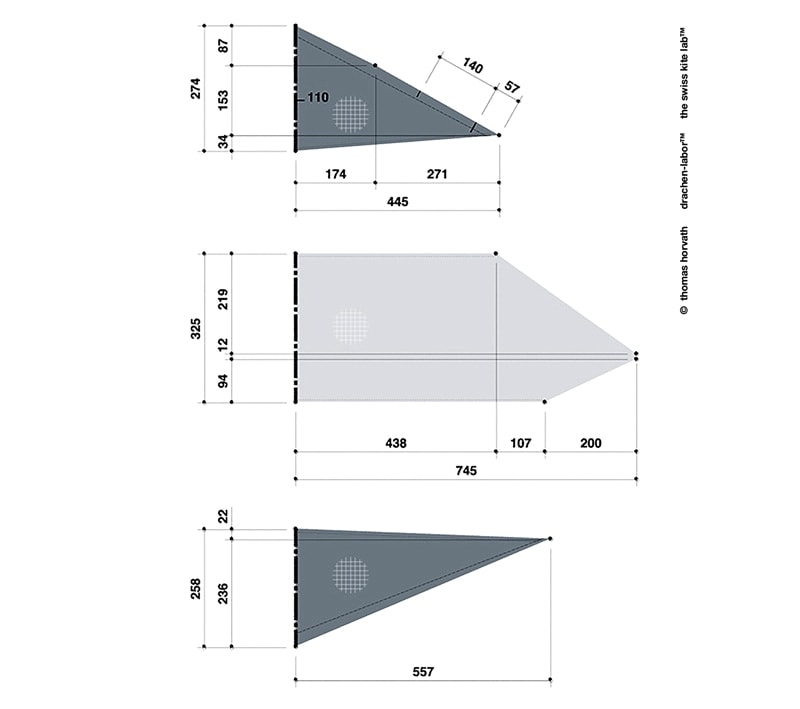
    Cut away the part left of the center fold of the panels. Punch 3 mm holes at the corners, spine and leading edge marks. The dimensions are for cutting the panels, including the 6 mm overlaps and the boundaries, that will reside in the leading and trailing edges of the completed sail. The 110 mm dimension shows the upper bridle connection.


    The best method is drafting the shapes onto the folded sail.

    Plan of the upper black panel of the kite


    Plan of the center white panel of the kite


    Plan for the lower black panel of the kite


    The pictures in this kite building plan are often showing details quite big, taken from a short distance. As a clue, you can take the squares in the Icarex cloth to determine the scale of a pic: They are roughly 10 mm, or two and a half of them are an inch.

    Western kite builders, making designs such as rokkakus, reltas, genkis or codys etc. may be surprised how small and accurate the details of an urban ninja are formed. On the other hand, people involved in indian fighters or North American fighter kites, will have to imagine the kite and its details in double size.


    2 cutting and assembling the sail

    Icarex with template
    When using the template, fold an Icarex panel sharply, lay the template on top of it and align the left edges of both.

    The holes for marking the kite shape
    Mark all the points through the holes, including the bridle and leading edge marks for the upper black panel. Remove the template, then cut the still folded panels with a straightedge and a sharp cutter.

    Mark at the spreader position
    For the leading edge marks of the upper black panel cut a small wedge as guide for drawing the marks on both left and right sides of the panel.

    Layout of the sail
    Press transfer adhesive tape, 6 mm or 1/4 inch wide, to the back side of the black panels, leaving a few millimeters free at the center fold. Place one half of the white panel over the highly visible tape liner and roll it back. Remove the liner slowly and let the white Icarex drop back onto the adhesive tape.
    The overlap of the panels is 6 mm or 1/4 inch. Using 5 mm wide tape, as we do on our production ninjas, there are nice 0.5 mm of Icarex left on both sides of the tape, protecting the adhesive from dust or sand.

    Taping the first seam of the sail
    Lay the left side of the white panel on to its right side, adjust the position for a good symmetry. Remove 1/2 inch of the tape liner at the center and fold it tightly up at 90°

    Taping the second seam of the sail
    Lay the left side of the black panel onto the white panel, adjust the position accurately and lock it with weights. Pull out the liner very slowly, be careful not to displace the panels. Press the black Icarex to the tape with the fingers, do not rub to avoid distortion of the seam.

    The assembled sail, three panels of Icarex
    The assembled sail of the kite with the profiled keel: Last chance to check for perfect symmetry.
    Should your finished flying kite lean to one side later in the sky, you can correct this by several setup adjustments and tweaks.


    3 sewing the sail

    Reinforcements for the sail of the kite
    The back side of the kite: the panels sticked together with standard 6 mm wide tape, which is exactly the measurement of the overlap.

    Before sewing, make compound patches of an adhesive Dacron 12 x 20 mm and two adhesive Icarex pieces 9 x 40 mm. Place the compound patches for the bridle and the z-line attachement exactly at the center fold. Two of them start on the white panel, this will make three layers at this tension loaded point.
    The upper bridle attachment is centered at 110 mm above the end of the black panel or 104 mm from the end of the white panel. That is 245 mm from the nose tip. then triple zig zag the panels together, 4 mm wide and 3 mm long is a nice stitch. At the center you may shorten the stitches to 1.5 mm to improve resistance.

    Sewing the trailing edge
    The front side of the sail, the black panel is on top:

    Sew first the folded Icarex trailing edges, avoid tensions as much as possible. Maybe a long double zig zag, reduced upper and lower thread tension and a double fabric transport will help. Then sew the leading edges with a narrow medium length triple zig zag.


    4 the leading edges

    The sewn leading edge at the wingtip
    For the wingtip cut pieces of Icarex-coated kevlar 6 x 16 mm and self-adhesive Icarex 10 x 10 mm and 16 x 40 mm. Stick the small adhesive Icarex patch at the outer end of the leading edge.

    Sticking the reinforcements at the wingtip
    Fold the Icarex piece sharply, fold the paper liner back and place the Kevlar or Dacron reinforcement onto the adhesive in such a way that it lies 1 to 2 mm from the outer edge of the leading edge on the finished kite.

    the finished leading edge wingtip detail
    Stick half of the Icarex piece to the leading edge using the fold as a positioning guide, turn the sail and press the second half down to the back side. Punch a hole with a diameter of 4 or 5 mm.

    Finishing the leading edge with cutouts and patches
    Place the leading edge spar reinfocement patch. Temporarily you may stick an additional layer here to protect this exposed point of the leading edge in hard city-flights on asphalt. Then cut out the leading edge: The opening is 9 mm deep and 80 mm long, the lower end at 20 mm, the upper end at 60 mm from the silver mark.


    5 the tail and the nose

    The reinforcemant compound for the tail section
    Make a compound of adhesive Dacron 20 x 50 mm folded at 30 mm and a piece of Dacron 10 x 40 mm for the spine end pocket. stick it accuratly aligned with the center fold of the kite and sew it to the sail with two straight stitches.

    Tail section of the kite sewn
    Front side of the spine end: melt the thread ends down and press them to the fabric (supported by product placement).

    Tail section of the kite finished with two holes
    Back side of the spine end: punch or melt with a soldering bit two holes, diameter 3mm.

    The nose piece made of Dacron
    And now the Nose: Make a piece of adhesive coated Dacron 25 x 50 mm with two beveled corners and two cuts 5 mm long and 5 mm from the center fold.

    Nose piece sticked to the kite sail
    Fold half of the paper liner sharply back and stick the nose piece to the sail, the sharp folds will help in positioning and centering accurately.

    Bungi through 4 holes of the Dacron nose
    Sew the nose to the sail, seal the front tip with a lighter, and punch 3 mm holes. Prepare a bungi cord with good flanges at both ends.

    Square knot in the bungi, loose.
    Make a square knot or reef knot, called the “Samariter-Knoten” in Switzerland. Later, the accurately placed holes and the bungi will hold the spine exactly at the center of the kite.

    This detail can also be solved with a bridle-line, it’s then possible to adjust the sail tension along the keel manually:

    Nose tensioning line, open.
    Make a line with a sharply tensioned pen-loop, see the next chapter how to do that. Start with a lenght around of 190 mm. Here you see a bridle line with an uncolored white Dyneema or Spectra core.

    Nose tensioning closed loop, tight.
    Go with the end of the line through the pen-loop, which you tighten seriously to get a nice friction. See the final steps at chapter 7 “assembling the kite”. This detail is more process reliable than the bungi solution, so with the urban ninja kite building kit there’s just bridle line included.


    6 the pen-loops

    Bridle line in the pliers
    To make a flange: let 4 mm line out of the pliers. All given lengths of lines include this allowance: the z-line is 130 mm when cut, with the two flanges melted down it will be 122 mm, ready for the loop.

    Pressed to the plyers to form a flange
    For a nice, compact flange: melt the bridle line and press it even and gently to the pliers with the plastic part of the lighter.

    The simple loop, loose
    Make a loose loop like this: the line shown is the z-line which will pull down the spine to the spreader.

    The loop laid around the pen
    Lay the loop around a slightly conical pen and pull the line until the flange stops at the knot.

    The tightened bridle line loop
    Tighten the loop around the pen to proof the strength of the knot. These loops are made directly on both ends of the x-line, at one end of the y-line and at one end of the z-line. And a very tight one for the nose tensioning detail.


    7 assembly of the kite

    The sail of the kite and the parts for making the kite ready to fly
    Punch or melt with a soldering bit two holes, diameter 3mm, at the three reinforcements along the spine. We use to fold the sail to make each pair of the holes in one step, good for symmetry too.

    Tie the z-line and the two legs of the bridle to the sail and tighten the knots carefully, again with the pen, but leave the loops open for inserting the spine later.

    The pigtail ends with simple overhand knots, stopped by a flange at each end. Larkshead the bridle around a knot of the pigtail.

    Use the lightest bridle line you can find. We like our all black 320 n Spectra core bridle line, which equals a 70 lb bridle line (such a sleeved line is 1 mm = 0.04 inch in diameter, and 0.6 mm = 0.02 inch when pressed in the tighten knot). All lenghts given are for this line, if you are using heavyer stuff, add a few millimeters at each end. See more unit conversions at the top of the left column.

    The X-Line and the Y-Line, back of the kite
    Insert the spine through the loops of the z-line and the bridle and into the tail pocket. Shown here the loop of the z-line near the seam and the upper bridle loop bottom right. Tighten the three loops. In the upper left shown the x-line with the attached y-line, the kite is assemembled on this photo. This is a production urban ninja, the panels are sticked together with 5 mm wide 9460 tape at the 6 mm overlap.

    Nose of the kite with jaco rubber piece
    Tension the bungi at the nose, putting first the knot into the Jaco, then the remaining second loop.

    The second bungi loop goes into the nose piece too.
    The finished spine nose detail, front side of the kite. The Jaco standoff connector is shortened here, but you can also leave it as is.

    Here’s the same detail with the bridle line solution:

    Nose of the kite with tensioning line solution.
    Tension the black line by moving the tight pen-loop. A full length Jaco standoff connector is mounted here, but split a the ring for a convenient assembling.

    Nose of the kite, front side, with vinyl cap.
    Cut away some of the line, leaving a few millimeters, which you seal with the lighter. This short piece will be your grip for adjusting. The vinyl-cap is optional, it’s included in the building kit.

    You may shorten the spine just a little bit, depending on then stretch in the fabric used. Most sail fabric will get longer under tension over time, especially if the sail is nylon spinnaker. So, better use icarex, which is polyester.

    The less the sail is tensioned along the spine, the better. That’s why we prefer the “line-solution” for dialing in just a nice zero tension.

    The leading edge carbon tube and the Apa connector
    Make the upper ends of the leading edge tubes as round and smooth as possible by sanding them. The backside of the kite is shown. The upper end of the stopper is 138 mm from the top of the Avia.125 3.1 mm carbon le-tube.

    Pushing the carbon spar into the leading edge pocket
    Insert the leading edge tubes fitted with the vinyl stoppers from top through the cutout into the leading edge and through the holes at the wingtip out again until the upper end is at the cutout. Place first the loop of the x-line above the stopper, then the Apa connector…

    Spreader to leading edge connection assembled
    …and push the tube up into the leading edge. Move the x-line and the Apa down to the stopper.

    The carbon spreader is placed into the apa connector
    When assembled, the loop of the x-line should align with the silver mark on the sail. Shown here the front side of the kite.

    The Z-Line for different zero or light wind adjustments
    Attaching the spreader: Extend the loop of the z-line to form a double loop around the spreader. This is the neutral standard setup for all our kites. With a single loop, the z-line will be longer, with three loops it will pull and bend the spine closer down to the spreader.
    When flying in the city, protect the double loop with a tape or two small vinyl or teflon tubes around the spreader beside the bridle line. This will prevent erosion of the z-line loops at take-offs and landings on asphalt.

    Now the kite is ready to being built up: Bend the spreader by holding both ends firmly and use the thumbs to place it into the Apa connectors.

    Double half hitch finished.
    First setup of the y-line: at the tail use two half hitches to tie the y-line around the spine. The x-line should now be under tension and the sail should be slack.

    Two half hitches in the y-line at the stern of the kite.

    The “double half hitch”: the first half hitch of the y-line at the keel, then the second half hitch. The line goes around the carbon spine as well and centers it nicely.

    Different flying characteristics by tensioning the y-line.
    Shown here the front side view of the kite, now ready to fly. For flights in the city protect the short section of the exposed y-line with tape, or go with the line through a short vinyl or teflon tube, which will contact the asphalt at take-offs.

    8 typography and graphics

    Draw the numbers onto both faces, the front side and the back side of the sail with a black marker pen. Stick a sample to the window to test the effects from an appropriate distance. We use comics-like fat fonts of course, like one called “field day filter”, stretched horizontally. And numbers, which clearly indicate the orientation of the ninja on its wild flights, also from the back side.

    Your name is printed to identify your personal kite on a crowded field, all urban ninjas look the same after all, or at least I used to think so.

    9 flights without wind

    The following pics show the urban ninja with the standard setup: it will park at 60 m in medium to stronger winds. In zero or very gentle breezes it has a light, but responsive pull. The short fly aways or dives will show an extreme nose up tendency, so you will be able to turn back the kite towards you anytime. The urban ninja rolls backwards gladly and recovers to a nice short horizontal glide within a few meters. Slacken the line instantly after the impulsive pull to fly this and most other moves.


    Light and heavy setup of the bridle

    Main view of the zero wind kite

    Back view with X-Line and Y-Line

    Dihedral adjustment for flying in zero winds


    With a lighter bridle setting, the kite will fly more agile and respond to light, but sharp pulls on the flying line. This is good for the urban ninja flying style. Shown here is an aggressive, short and light bridle.

    A quite important adjustment is the tension of the whole sail. Shorten or lenghten the y-line on the field to adjust the effective span of the spreader. This affects directly the span of the kite and the slack in the sail.

    The urban ninja flies best with a very very slack sail, resulting in a deep billow and an accented keel area. A slack sail slows this fast little kite down. The airflow will pass a softer, flexible surface, especially if the Icarex is somewhat crinkly, hence adjust the y-line at will. The pictures show a rather tight sail.

    The dihedral can be adjusted with the length of the z-line to vary the yaw stability in glides. As an additional effect of a shorter z-line the spine bend increases and flatspins become tighter, especially with this kite.


    Attaching the flying line to the kite with a larkshead knot
    Lay out a lot of spectra line (called dyneema in europe) such as the zero.6 well sorted to the ground, attach it with a larkshead loop to the pigtail and lit off.

    Never fly:

    • higher than 60 m – 180 ft
    • near airports or roads
    • in stormy weather
    • near powerlines and railroads

    Enjoy your flight.

    Thomas Horvath, Zurich, 2026


    Zero wind flying at a kite festival: 5 urban ninjas
    Ninjas at the Donaueschingen Kite Festival. There was no wind. © Markus Egger

    Materials and weight

    If you build your urban ninja kite heavier than indicated in the specs of this plan, it would be too jumpy and less fun to control. Use Icarex, not soft nylon textiles like Chikara or similar. And: the crisp sound of icarex polyester allows you to better locate your ninja at night in the dark.

    the urban ninja ultralight production

    If you prefer to fly this single line kite innovation right away, you can order a ready to fly urban ninja ul production. Choose a seasonal color from the icarex palette. Comes without a number or flying line, but in the famous black Tube, which is 1 meter long.

    urban ninja: the numbers

    The small edition of the urban ninja, the perfect gear for a spontaneous flight on asphalt around the corner. The urban ninja: the numbers comes with your optional personal number, in some very special Icarex colors and of course in the short 2 ft Tube.

    Copyright, licence and workshops

    This kite making plan is for non commercial, private use only. © ch 2026 horvath.ch

    Creative Commons License

    Creative commons attribution-noncommercial-no-derivative-works license

    • attribution of the author
    • no commercial use
    • no processing

    2006 – 2015: www.horvath.ch/ninja/
    the_urban_ninja.html
    since 2015: https://www.horvath.ch/en/
    The-urban-ninja-kite-plan


    If you are planning to build a couple of these light wind kites in a workshop, please contact us. There are some simple concepts to find a fair deal.
    You may not trade off urban ninja kites against other kites or anything else.
    We are a member of the American Kitefliers Association AKA.

  • Bridle setups

    Is your bridle setup too light or too heavy?

    Light adjusted bridle

    Enables the immediate initiation of a flat-spin almost at any moment thanks to a more lively behavior in flight, e.g. while in the climbing phase of a high start. Also, the kite will pull a bit less. Generally, a light bridle (or “flat” in german: The attitude of the kite is rather flat, towards horizontal) supports the active agile flying style. You have reached the limit towards the front when the rear segment of the bridle is scratching the spreader.

    Heavy adjusted bridle

    The urban ninja or whatever is traveling straight as a carbon rod to the zenith with explicit pull. You feel the efficiency in your fingers. Flying e.g. the long way home though, flat-spins or other moves will be harder to initiate due to the stable, aligned position of the kite in the sky (“steep” in german: the attitude of the kite is rather steep, towards vertical). The limit towards rear: Such heavy, that the kite will hardly lift off, but pull like crazy.

    The bridle of a light wind kite, view from the left side.
    An extremely short and very light bridle on “the urban ninja”.

    Bridle concepts on dual line kites

    We tested active bridle configurations too, but as often, everything has its price. Even though some kind of active bridle can combine a bit of both light and heavy characteristics, the sharp firm input to the kite is tamed.

    The “active bridle” for dual line freestyle kites was established by Andy Wardley and first implemented in the Benson Outerspace. There are also dynamic or turbo bridles. European champ Stefan Furter and others prefer to develop and fly static – three point – bridles on their stunt kites.They rely on the direct contact to their sophisticated competition kites for a perfect control in precision and tricks.

    There are also bridles on Revolutions, but not only. With 4 flying lines you can also interact directly with the kite without any bridle. But this is beyond my competence.

    The bridle on a zero wind kite

    Our kites have the minimum possible 2-point bridle. Between it and the flying line the pigtail is connected, each with a simple larkshead loop.

    Being active designs, our kites should respond directly to inputs, so fly them with a rather light adjusted bridle. In practice: Fly with a light bridle in the courtyard, adjust it a few millimeters heavier for high broad space soaring in Sils Maria. Test extreme setups.

    Factory setup: The bridles on Horvath-Kites are set up rather light to achieve versatile, agile flight characteristics.

    Also, the lenght of the flying line has some influence on the agility of your kite. With a short line the kite converts your crisp inputs directly, a long line dampens the inputs.

    More on bridles: The urban ninja kite making project: Bridle adjustments.

  • Upwards in Zero Wind

    English abstract of “Mit Null Wind nach oben”
    Tages-Anzeiger Zurich, in Culture & Society

    Thomas Horvath with a wing shape kite.
    Preparation for a short flight in Zurich-Altstetten: Thomas Horvath’s kites are suited especially for the city. Image © Sabina Bobst

    The article by renowned Ulrike Hark starts with introducing the smallest Horvath kite, the “i’ll be back” and its Tensegrity construction principles and details. “The kite can breath” and “light mobile agile” are some of her observations.

    light mobile agile

    The manufacturing methods are mentioned, the product range of 13 models and the international market, mainly USA, Germany and of course, Switzerland.

    Hark ends with a citation: «When I’m back from delivering the kites at the post office, then I feel – it was a good day.».

    The article was published in “Tages-Anzeiger” Zurich 2014
    “Tages-Anzeiger” is, besides NZZ, the most read and respected newspaper in Switzerland.

  • The smooth, the bad, the ugly

    Loop with a single line lightwind kite.
    Loop with a single line lightwind kite: urban ninja the bad.

    The smooth ones

    Modified leading edges

    Very close to the kite shown in the plan: There, the leading edges are Avia.125 3.1 mm carbon tubes, they weigh 7.5 g/m. Using our 3.0 mm carbon tubes at 5.4 g/m of the same length in the leading edges, the urban ninja will fly a bit smoother.

    A light frame

    For an even calmer behavior you can use the ul 3.0 mm carbon tubes for the whole frame, including spine and spreader. The kite will become slower and very precise, but with a slightly reduced wind range in strong wind. It will be simply blown away in a flat-spin, for instance. We have the special ul 3.0 mm 5.4 g carbon tubes in stock, most of the time.

    Our factory made production-urban-ninja-ul’s and the building set come in this configuration, it’s the best.

    Scale it up

    A possible, scaled up variation of the kite is completely framed with Avia.125 tubes, which you can buy or order almost everywhere. But it’s scaled up to 104%, thus, for example, the spine is 1.04 m long. The behavior in flight is similar to our production kite.

    This version will be a bit more complicated for do-it-yourself kite builders: You have to look for the tubes in 2 m length and the white center panel is wider than the 1.40 m Icarex roll is. So, it will have to be laid out and cut lengthwise, consuming 1.50 m of the fabric. Details such as the nose, the wingtips etc. are not scaled, while the lines are.


    The bad

    Single line looping

    Various prototype-stages of this kite flew extended public testings on kite festivals and meetings. What’s possible under most diverse wind conditions, and what makes sense?

    This kite flies in any wind, from zero to strong, with decreasing nonchalance. It’s the only single line light-wind kite performing loops.

    The building specs

    Framing avia.125, 3.1 mm carbon tubes, 7.5 g/m:
    Leading edges: 566 mm, stoppers at 138 mm from top
    Spreader: 840 mm

    Spine: solid 4 mm fiberglass rod: start with 860 mm, then shorten it step by step. Depending on the nose detail and the overlap of the panels x 2.

    Lines, same as on the original urban ninja:
    X-Line: 820 mm
    Y-Line: 720 mm, shorten after first assembly
    Z-Line: 130 mm

    Bridle: 600 mm to 640 mm, pigtail a couple of inches or leader line 700 mm

    Icarex leading edges: 30 x 874 mm
    Icarex trailing edges: 12 x 812 mm, which is a bit stronger than on the original urban ninja.

    The building procedure for making this kite is the same as for the original urban ninja. All details are also the same, except the nose, which is a Dacron piece of 35 x 70 mm on the bad, instead of 25 x 50 mm on the original ninja kite.

    The dashed lines at the upper leading edge and above the trailing edge show optional reinforcements of adhesive icarex. They make the kite more sturdy when flying through radical moves but add quite some grams.

    Tension the Y-Line until you like the radius of the loops and enjoy your radical flight.

    All dimensions are mm, millimeters:

    Kite-building-plan: 3 panels of the urban ninja the bad.

    The plan for this kite is strictly for non-commercial use only:
    creative commons attribution-noncommercial-no-derivative-works license.


    the bad on youtube…


    Urban ninja the bad lifts off blatantly and flies the loops in Potsdam near Berlin. We manufacture this kite for friends and good customers, there’s no building kit. This is a fascinating kite.

    The Stabilizer™ for the production model of the bad is 800 mm long, color code dark gray, the Tube™ 860 mm and thus MiniPac compatible.


    The ugly

    There’s no ugly variation, but heaps of copies and imitations, that’s ugly.

    The urban ninja kite complements a synergetic glider kite like the lwh perfectly. Play around by day with your ninjas in a little wind. On a calm evening take your well-adjusted “long way home” for high soaring.

  • Light kite building materials

    Parts and materials used on light kites. Weights and dimensions are measured by the kite-lab.

    1 hardware specials

    Special hardware parts for light kites.

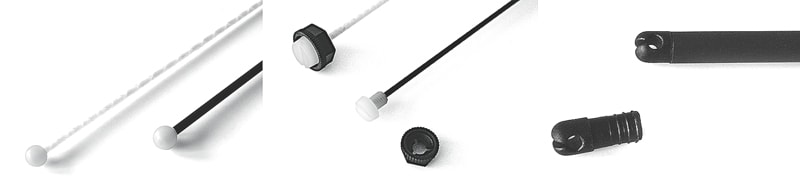
    Delrin ball end caps

    An efficient solution instead of vinyl caps on any light kite: They glide smoothly on Icarex or kevlar, good for flexible wingtips. No punching through even in the hottest sun.

    ø 4.8 mm, 0.05 g, 10 balls
    ø 5.6 mm, 0.08 g, 10 balls

    Screwed standoff sail connectors for ul stunt kites

    The polyamide screw is pulled into the sail, so it’s impossible for the flying lines to get caught. The nut is pushed onto the bolt and then fixed with one turn.

    m5, ø 12 mm, for standoffs ø 2.0 mm, indoor, 1.0 g
    m5, ø 12 mm, for standoffs ø 2.5 mm, ultralight, 1.0 g
    m6, ø 15 mm, for standoffs ø 3.0 mm, heavy, 1.6 g
    m5 or m6, without drilling

    horvath.240

    A minimal internal nock: for skysharks or avia skinnies with an internal diameter of 6.1 mm. Perfect for stunt kites with leading edges such as skysharks p200. Bungi and leechline are safe and well protected in this ultralight pe nock.

    outer ø 7.6 mm, 0.4 g, black

    2 hardware for kitemaking

    These parts are also connectors and spare parts for light stunt kites.

    Standard hardware for kites.

    fsd-plug

    Connects 4 mm carbon tubes into skysharks or avia skinnies with an inner diameter of 6.1 mm.

    insert is 33 mm, yellow, 0.8 g

    fsd-hardtops

    End nocks made of the just right hard plastic.

    micro, for 2 mm to 2.9 mm, conical drilling, 0.2 g
    small, 4 mm, 4.5 mm=avia 180, 5 mm, 0.6 g

    jaco-standoff-connector

    On stunt kites: spreader max. 6 mm. We use this part as the shock absorbing nose on our smaller kites. Durable, soft synthetic rubber formula.

    for 3 mm tubes, lower spreader 4.5 to 6 mm, 0.7 g

    apa-standoff-connectors

    On stunt kites: spreader max. 6 mm resp. 8 mm, the shock absorbing nose on our synergetic kites. Durable, synthetic rubber formula, nice look.

    bigger hole 5.1 mm, wing connectors urban ninja, 1.4 g
    bigger hole 7.6 mm, 1.7 g

    carbon-connector horvath.ch

    For skysharks and avia skinnies with an inner diameter of 6.1 mm, smoothed ends for gentle load in the plugged tubes, two available lengths.

    70 mm: 2.0 g, 90 mm: 2.5 g

    3 carbon tubes and rods

    Tapered skyshark carbon tubes.

    Tapered wrapped Skyshark carbon tubes, conical prepreg

    With good reinforcements at both ends, especially at the larger end. The spine and the long section in the wings of “the long way home” are accurately balanced Skyshark 2pt’s. The wingspan of the large kite is 2.76 m and the long wings are weighed in pairs.

    Skyshark 2pt 825 — 32″

    thick end: ø inner 6.1 mm, d outer 7.1 mm,
    thin end: ø inner 4.2 mm, d outer 5.4 mm,
    length 825 mm, 8.4 to 9.8 g a tube

    Skyshark 2pt 1’016 — 40″

    thick end: ø inner 6.1 mm, d outer 7.1 mm,
    thin end: ø inner 4.2 mm, d outer 5.4 mm,
    length 1’016 mm, 10.0 to 11.8 g a tube

    Pultruded carbon tubes

    With optimal wall widths, round and straight, light yet stiff enough, good pressure resistance and resilience, small tolerance in weight. An avia-sport mcr 070 1.8 mm solid carbon rod fits exactly into the 3.1 mm carbon-tube.

    carbon tube ul 3.0 mm 1’000 mm, 5.4 g/m
    carbon tube avia 3.1 mm 1’000 mm, 7.5 g/m
    carbon tube ul 4.0 mm 1’000 mm, 7.8 g/m
    carbon tube exel 4.0 mm 1’000 mm, 10.5 g/m

    carbon rods, solid

    carbon rod 1.5 mm 1’000 mm, 2.5 g/m, low tolerance
    carbon rod 2.0 mm 1’000 mm, 4.5 g/m
    carbon rod 2.5 mm 1’000 mm, 7.7 g/m

    4 fiberglass rods

    Special: wrapped fiberglass with a smooth and clear look. Fine grades of diameter allow for a precise tuning of weight and resilience. The dimensions 2.2 and 2.4 mm are suitable for flexible standoff-solutions on light-wind stunt kites. European champion Stefan Furter is using our fiberglass to set up his kites for light breezes.

    Clear fiberglass rods in fine gradations.

    These fiberglass rods have a lenght of 2’000 mm.

    fiberglass rod, wrapped, 1.5 mm, 3.6 g/m
    fiberglass rod, wrapped, 1.6 mm, 4.0 g/m
    fiberglass rod, wrapped, 1.7 mm, 4.4 g/m
    fiberglass rod, wrapped, 1.9 mm, 5.4 g/m
    fiberglass rod, wrapped, 2.0 mm, 6.2 g/m
    fiberglass rod, wrapped, 2.2 mm, 7.4 g/m
    fiberglass rod, wrapped, 2.4 mm, 8.6 g/m


    5 fabrics for kites

    Icarex

    Tear resistant kite cloth, light, hydrophobic, dimensionally stable. Rather a polyester-fiber reinforced polycarbonate-film: roll width 1.40 m, 36 g/m2 weighed.


    Our Icarex colors in 2025

    Icarex pc 31 – 31 white or a lot of other colors.

    Chikara

    Ripstop-nylon, 42g/m2: This nylon fabric is elastic and has a good resistance to abrasion, but is highly hygroscopic. It elongates when humid, therefore use it with caution.

    black: width 1.55 m
    silver: aluminum coated, width 1.55 m

    Ventex would be a sleek polyester kite fabric with nice flying characteristics. Unfortunately, the limited color palette is only randomly available. In addition, it’s less precise in processing than icarex.


    6 adhesive reinforcements

    Adhesive Icarex

    Coated with uv-proof and humidity resistant acrylic film. Little sticking while applying, after pressing extremely resistant particularly to shear forces. This taping film is very thin and long living, the best available.

    black, 100 mm x 210 mm
    black, 300 mm x 210 mm

    UL-kevlar

    Coated with black Icarex, therefore can be cut with a scalpel or a fresh cutter.

    black, 40 mm x 210 mm
    black, 80 mm x 210 mm

    Adhesive Dacron

    Coated with uv-proof and humidity resistant acrylic film. Little sticking while applying. Later, after pressing extremely resistant particularly to shear forces. This taping film is very strong and long living. This is not the “Insignia” cloth for sail numbers.

    160 g/m2 net: black, 100 mm x 210 mm
    160 g/m2 net: black, 300 mm x 210 mm

    Highly transparent uv proof acrylic adhesive film

    Cut any width of handy tapes: 3 mm, 5 mm, 6 mm or areas. Pleasant to work with, while sewing, the needle stays clean without using any silicone. This is the best and longest lasting adhesive transfer film available, based on the expensive 3m 9460.

    transparent, 0.05 mm x 100 mm x 210 mm
    transparent, 0.05 mm x 300 mm x 210 mm

    7 kite construction lines

    Black bridle line on black spools.


    Bridle line 650 n

    65 dan-kg, 140 lbs, by Level One, a popular bridle line on stunt kites: Dyneema-Spectra with dark gray shiny Dacron sleeve.

    Bridle line 320 n

    32 dan-kg, 70 lbs, ø 1.0 mm: Dyneema-Spectra core, black polyester sleeve. Good for compact flanges.

    Bridle line 600 n

    60 dan-kg, 130 lbs, ø 1.2 mm: Dyneema-Spectra core, black polyester sleeve. Good for compact flanges.

    How to make “the pen loop” with nice compact flanges at the end of the lines see chapter 6 of the urban-ninja-project.

    Bungi cord

    Black polyester sleeve. Variable tension from very gentle (rubber) to hard (sleeve). ø 1.8 mm.
  • Improving a kite: zero 1.1

    Sketch showing the prints on the sail of the kite.
    One of the countless sketches showing the prints on the sail: Instructions and tips for use, brand and license, name and contact of the pilot, etc. In the end, the kite in the production series looked completely different, of course. © Thomas Horvath

    The modifications

    There are options to modify a zero 1.1 first series kite for enhanced synergetic performance. This kite was licensed to Volango-Kitewalker some time ago. It was white with a lot of text printed on the sail. The last series were orange.

    Most copies of Horvath-Kites don’t consider the centering of the spine rod or tube either, and the exact symmetry out of the factory is random.


    The nose detail for a consistent symmetry

    nose of the kite as provided

    The original nose detail: The spine is moving left and right, making the kite instable in stronger winds.

    new nose of the kite

    Make an accurate fixation of the spine: 4 holes very close to the center line instead of the 2 holes in the series.

    preparing the bridle line

    The core of a bridle line and the outer coating (the outer part of any bridle line): Separate the coating in order to get a soft line with good grip. The length is around 180 mm, you will shorten the line when the nose detail is finished.

    the flange at one end ofthe line

    Make a solid flange at one end of the line, using pliers and a lighter.

    the pen loop still loose

    Make a loop exactly as shown. We call this thing a “pen loop”.

    the loop tightened around a pen

    Tighten the loop around a pen. The stronger the more reliable the sail tension along the spine will be in flight.

    the nose tensioner goes through all 4 holes

    The nose tensioning line goes through all 4 holes as shown.

    the tight pen loop at the nose of the kite

    The nose piece is cut to be open at the tip to enable inserting of the line 2 times.

    rear view of the kite

    Now pulling the line towards the front of the kite will tension the sail along the spine. Zero tension is beautiful and best, just smooth out the last folds in the sail. Stronger tension will bend the spine, resulting in a more agile behavior of the kite, but don’t overdo.

    front view of the kite with the optional vinyl cap

    The vinyl cap is optional, just to smooth out the look a bit.


    Shifting the leading edge connectors

    the leading edge detail of the kite

    Push the leading edge connectors down by 1 cm. This will tension the x-line, while the sail will become looser.

    the new enhanced positioning of the leading edge connector

    The new position is 1 cm or a bit lower than in zero 1.1 kites of some series.


    Option: flying the kite with a tail

    If you like very long kite tails as we do, make 2 small holes at the stern of the kite, on each side of the spine and attach a short line with a knot at the end. The detail is looking similar to the nose. Now the kite is prepared for flying with a long tail.

    The tail can be excessively long if you take a light material with low drag. Something like 100 m of vhs or wider video-tape, it’s floating by itself. The kite isn’t loaded by additional weight. The “urban ninja” loves long kite tails in a slight wind too. Upon request, we have beautiful long white kite tails in stock, good for the urban ninja and larger kites, but not for smaller ones.

  • Kite making workshops

    For companies or teams:


    These beautiful ultra-light weight zero wind kites from Horvath in Zurich are amazing. Built using specialized sail materials and finely manufactured carbon tubing, they fly on thermals, the same way birds do.

    They represent, to me anyway, a pinnacle of kiting, both in terms of engineering and, ultimately, elegance.

    Nichol Alexander, publisher, New York, USA


    The sail of the kite building kit in white film.

    The sail is cut and marked, here with the cnc cutted sticky parts. Usually the sail is of white light film, but if a company has a high corporate color priority, it can be Icarex.

    All the parts for building a zero-wind-kite.

    A sticky selfmade sixpack. The sail is fold, cut and marked, the carbon framing and the small hardware ready. This way we make it in one afternoon, including a bit of flying together.

    4 selfmade kites made of film and carbon.

    Sticky workshop-kites, here in uni color. The sail is white film.

    Kite on the underground parking with neon light from below.

    Sticky Wing on the underground parking. Sail: our classic white hdpe film, 20 g/m2 Swiss made.

    Make something unique with your team and learn to appreciate your colleagues or customers even better: Lift off and float together.

    We will make an innovative kite from A to Z. Then we will fly together, indoor or, in good weather (= zero wind) outside, just in front of the atelier.


    kites

    New in 2024: sticky 3.7 with a wing span of 1’000 mm, or sticky wing with a wing span of 1’250 mm. Both are ultralight synergetic zerowind kites with a carbon frame, in various icarex colors or even lighter white film.

    Persons

    Typically 6 (4 to 9) in our studio, or up to 30 or more in your company. Kids and teens are welcome and can often help adults.

    Where

    In the Kite-Lab 8047 Zurich or in a room at your company. Lightness and flow in a relaxed and inspiring atmosphere.

    When

    Date and time by appointment, afternoon or evening, on Saturdays or Sundays too. As the components are precisely prepared, it will take just one afternoon, floating included.


    Please contact Thomas Horvath by e-mail to clarify first questions or, if desired, to make an appointment for a briefing in the Kite-Lab.

    Your self-built zero wind kite is extremely durable and will remind you of this team event for a long time to come.

    Information about the kite workshops in the studio in 8047 Zurich, also for private participants. Private workshops in our Atelier take place usually on Sunday afternoons.